
of Lisbon
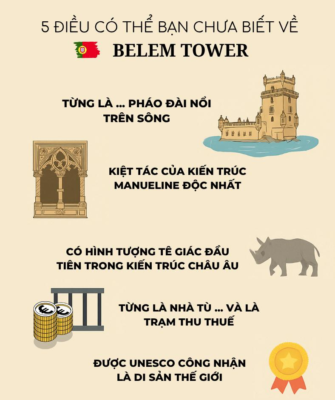
🪖 It used to be… a floating fortress on the river
The Belém Tower was originally built in the early 16th century on a small island in the middle of the Tagus River, completely isolated from the mainland. It served as a fortress protecting the port of Lisbon from pirates and foreign warships – like a silent soldier guarding the country's gateway.
🌀 A masterpiece of unique Manueline architecture
The tower is a perfect example of the Manueline style – unique to Portugal – with motifs such as ropes, anchors, sea anemone flowers, and religious symbols carved with exquisite detail. This style is a blend of Gothic and maritime inspirations from the Age of Navigation.
🦏 The first rhinoceros imagery in European architecture.
Near the tower's entrance is a small bas-relief depicting a rhinoceros – believed to be the first depiction of a rhinoceros ever seen in European architecture. It was inspired by a real gift: a rhinoceros sent by an Indian king to King Manuel I in 1515!
🕳️ Formerly a prison and tax collection station
After its military role ended, the tower was used as a prison, especially for political prisoners. In addition, it served as a place for inspecting and collecting taxes on goods – a gateway for controlling trade before entering the capital, Lisbon.
🏅 Recognized as a UNESCO World Heritage Site
Along with the Jerónimos Monastery, the Belém Tower was designated a World Heritage Site in 1983. More than just a remarkable architectural structure, it symbolizes the golden age when Portugal ventured out to sea and led the world's explorations.