
Bài viết/blog về cuộc hành hương
What is Catholic Pilgrimage? Understanding The Meaning of Journey of Faith
More than a journey to a destination, pilgrimage is a journey of the heart
Throughout history, people of faith have traveled to sacred places in search of prayer, reflection, and a deeper connection with God. Within the Catholic tradition, pilgrimage has always held a special meaning – it is not simply a physical journey from one place to another, but a spiritual experience that invites believers to renew their faith.
A Catholic pilgrimage is a journey made by individuals or communities to a sacred destination associated with religious significance. These destinations may include places connected with Jesus Christ, the Blessed Virgin Mary, the Apostles, saints, or important events in the history of the Church.
From the ancient roads leading to Rome, Jerusalem, and Santiago de Compostela to modern pilgrimages to Guadalupe, Lourdes, Fatima, and other Marian shrines, millions of Catholics continue this tradition as a way to pray, seek spiritual renewal, and grow closer to God.
For many pilgrims, the destination is important, but the transformation that takes place along the journey is what gives pilgrimage its deeper meaning.
The history of pilgrimage in the Catholic Church
The tradition of pilgrimage has deep roots in Christianity. From the earliest centuries of the Church, Christians traveled to places connected with the life, death, and resurrection of Jesus Christ, as well as locations associated with the Apostles and early Christian communities.
One of the earliest and most significant destinations was Jerusalem, where Christians came to pray at places connected with the Passion and Resurrection of Christ. Over time, other important pilgrimage routes developed, including journeys to Rome, where Catholics visit the tombs of Saints Peter and Paul, and Santiago de Compostela, associated with the Apostle Saint James.
Throughout the centuries, pilgrimage became an important expression of Catholic devotion. It allowed believers to step away from ordinary routines, dedicate time to prayer, and experience their faith in a deeper and more personal way.
Today, while transportation has made international travel easier, the spiritual purpose of pilgrimage remains unchanged. People still journey because they seek something beyond tourism – a moment of encounter, reflection, and renewal.
The spiritual meaning of a Catholic pilgrimage
At its core, pilgrimage represents the journey of human life itself. Catholics often understand life as a journey toward God, and a pilgrimage becomes a visible expression of this spiritual reality.
The act of leaving home, traveling to a sacred destination, and dedicating time to prayer symbolizes a willingness to seek something greater than everyday concerns. During a pilgrimage, people often find opportunities to slow down, reflect, and reconnect with their faith.
Many pilgrims travel with specific intentions. Some pray for their families, some seek comfort during difficult moments, some give thanks for blessings received, and others simply desire a deeper relationship with God.
A pilgrimage does not require a person to have a perfect faith journey. Instead, it welcomes people at different stages of life and invites them to take a meaningful step forward.
Why sacred destinations matter in Catholic pilgrimage
Catholic pilgrimage destinations are not chosen simply because they are beautiful or historically significant. They are meaningful because they are connected with important moments in salvation history, Marian apparitions, the lives of saints, or centuries of Christian devotion.
For example, the Basilica of Our Lady of Guadalupe in Mexico is closely connected with the story of the Virgin Mary appearing to Saint Juan Diego and has become one of the most important Marian pilgrimage sites in the world.
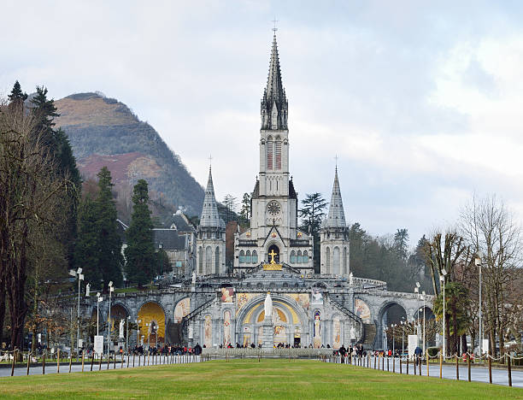
Lourdes in France is known for its connection with the apparitions of Our Lady to Saint Bernadette Soubirous, while Fatima in Portugal is recognized worldwide as a place of Marian devotion and prayer.
Other destinations, such as Rome, the Holy Land, Turkey, and Greece, allow pilgrims to walk through places connected with biblical history and the early Christian Church.
Each destination carries its own story, allowing pilgrims to encounter faith through history, culture, and prayer.
Pilgrimage is different from ordinary travel
Although pilgrimage may include sightseeing and cultural exploration, its purpose goes beyond traditional tourism.
A traveler may visit a famous landmark to admire its architecture or learn about its history. A pilgrim, however, approaches a sacred place with a different intention. The visit becomes an opportunity for prayer, reflection, and spiritual connection.
This does not mean that pilgrims cannot enjoy the beauty of the places they visit. In fact, many Catholic pilgrimage journeys naturally combine faith with cultural discovery. Exploring historic cities, experiencing local traditions, and meeting people from different backgrounds can enrich the overall experience.
A meaningful pilgrimage brings together both dimensions: discovering the world while allowing the journey to transform the person who travels.
The role of community in Catholic pilgrimage
One of the beautiful aspects of Catholic pilgrimage is the sense of community it creates. Many people travel as families, parish groups, or organized communities, sharing prayers, experiences, and memories throughout the journey.
Traveling together creates opportunities for connection. People who begin as strangers often become companions who support one another through moments of prayer, reflection, and discovery.
For many pilgrims, the relationships formed during a journey become one of the most memorable parts of the experience.
A pilgrimage reminds believers that faith is not lived alone. It is a journey shared with others, united by common hope and devotion.
International Catholic pilgrimage: A journey across cultures and traditions
Modern Catholic pilgrimage has expanded beyond local shrines and national destinations. Today, many faithful choose international pilgrimage journeys that allow them to discover different cultures while deepening their spiritual life.
An international pilgrimage can lead travelers to places such as:
– Mexico, home to the Basilica of Our Lady of Guadalupe
– Turkey and Greece, where many locations are connected with the missionary journeys of Saint Paul
– East Asia, where Catholic communities have developed within diverse cultural traditions
– Europe, where countless churches, shrines, and historic Christian sites continue to welcome pilgrims
These journeys allow Catholics to see how faith has been lived and expressed in different parts of the world.
They also provide an opportunity to recognize the universal nature of the Catholic Church – a global community connected by faith despite differences in language, culture, and geography.
Preparing your heart for a pilgrimage journey
While practical preparation is important, the most meaningful preparation for a Catholic pilgrimage happens within the heart.
Before traveling, many pilgrims spend time learning about the destination, praying for their intentions, and reflecting on what they hope to receive from the experience.
A pilgrimage is not measured only by the number of places visited or the photographs taken along the way. Its true value often appears in quieter moments: a prayer inside a historic church, a reflection before a sacred image, or a feeling of peace while standing in a place connected with generations of believers.
The journey continues even after returning home, as the experiences and reflections from the pilgrimage become part of everyday life.
Carnival US Travel – Creating meaningful Catholic pilgrimage experiences
At Carnival US Travel, we believe that every pilgrimage journey carries a unique story. A meaningful pilgrimage is not only about reaching a destination, but about discovering the faith, history, and traditions that make each place special.
Through carefully designed Catholic pilgrimage programs, Carnival US Travel aims to connect travelers with sacred destinations around the world while providing a comfortable and meaningful travel experience.
From Guadalupe in Mexico, the footsteps of Saint Paul in Turkey and Greece, to Catholic heritage journeys across East Asia, each itinerary is created to help pilgrims explore the world while deepening their spiritual connection.
Because a true pilgrimage is not only a journey to a sacred place – it is a journey that changes the person who makes it.