
Địa điểm & Trải nghiệm
Zaragoza and Salamanca: Two Different Expressions of Faith and Spanish Heritage
Beyond the Familiar Image of Spain
When people imagine a journey through Spain, Barcelona is often one of the first cities that comes to mind. The Sagrada Família, the Gothic Quarter, Park Güell, La Rambla, and the distinctive architecture associated with Antoni Gaudí have made the city one of the most recognizable destinations in Europe. Yet Spain is much larger than the images most frequently seen in travel brochures, and some of its most meaningful experiences can be found in cities where religious heritage, historic architecture, local traditions, and everyday life have developed alongside one another for centuries.
Zaragoza and Salamanca are two such places.
As part of the France – Spain – Portugal – Italy Pilgrimage Journey in December 2026, the group travels from Barcelona to Zaragoza and then continues to Salamanca before crossing into Portugal toward Fatima. These two cities offer very different experiences, and that difference is precisely what makes them valuable within the journey. Zaragoza brings pilgrims into a setting strongly connected with devotion to Our Lady of the Pillar, while Salamanca offers a broader encounter with historic Spain through its cathedral, public spaces, architecture, and atmosphere.
Neither destination is simply included to add another city to the itinerary. Each one provides an opportunity to see how faith has been expressed within a particular place and how religious heritage remains woven into the cultural landscape. For travelers who have come to Europe not only to see famous landmarks but also to experience a pilgrimage, these quieter chapters can become especially meaningful because they allow the journey to move beyond the most familiar images of Spain.
Zaragoza – Entering a City Shaped by Marian Devotion
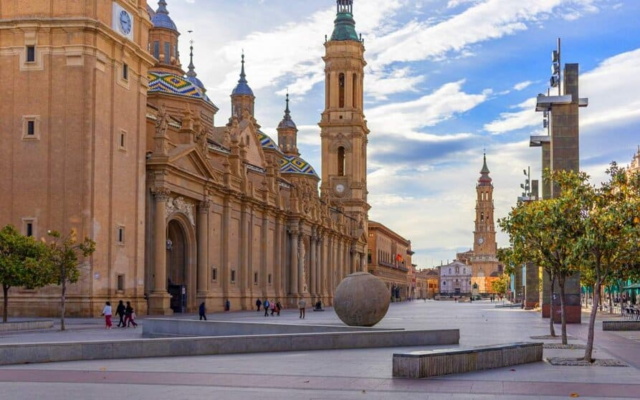
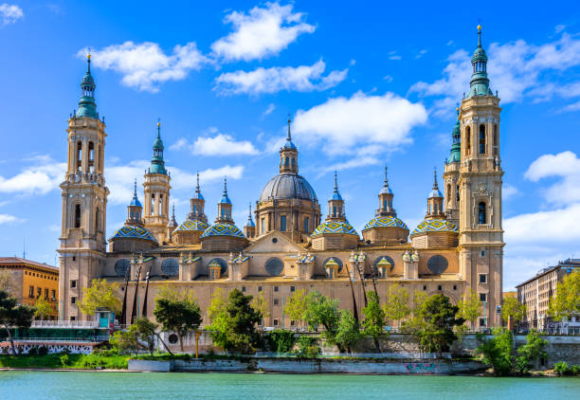
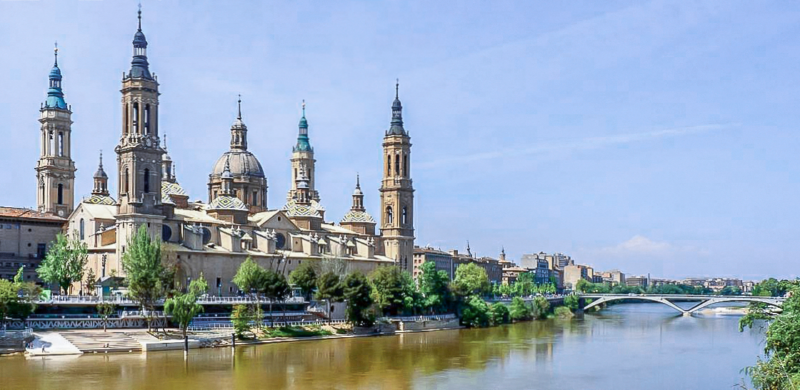
After the energy and architectural richness of Barcelona, the journey moves toward Zaragoza, where the focus turns more clearly toward Marian devotion. The centerpiece of the visit is the Basilica of Our Lady of the Pillar, where the group has the opportunity to venerate the Sacred Pillar and celebrate Mass at the shrine. The itinerary also includes visits to the Cathedral of the Savior and the Basilica of Santa Engracia, which preserves the relics of martyrs dating back to the fourth century.
For a pilgrim, arriving at a shrine is different from arriving at an ordinary historic landmark. The building itself may be impressive, but its deeper meaning comes from the people who have gathered there over generations to pray, celebrate Mass, seek comfort, and express gratitude. A pilgrimage destination carries the memory of countless individual journeys, even when the stories of those who came before are no longer known.
That is part of what gives Zaragoza its particular atmosphere. The Basilica of Our Lady of the Pillar is not simply a place to admire before moving on to the next attraction. It is a place where pilgrims can pause and place their own intentions within a much larger tradition of Marian devotion. Some may arrive carrying prayers for their families, while others may bring personal concerns or simply a desire to give thanks. Each person experiences the same sacred space differently, yet all become part of the same shared moment.
The celebration of Mass at the shrine makes that experience even more personal. Instead of observing a sacred site from the outside, the group participates in the life of the place through prayer and worship. This distinction may seem subtle, but it can change the way a destination remains in memory. A church visited as part of sightseeing may be remembered for its architecture; a church where one has prayed and celebrated Mass can become connected to a personal chapter of life.
The Sacred Pillar and the Continuity of Pilgrimage
There is something powerful about standing in a place where generations of people have come with their own hopes, questions, and prayers. A pilgrimage shrine is shaped not only by the building that stands there, but also by the continuity of the people who continue to return.
At the Basilica of Our Lady of the Pillar, the Sacred Pillar itself becomes a focal point of that experience. For the pilgrim, venerating the Sacred Pillar is not simply another item to complete on a sightseeing schedule. It is an opportunity to participate in a devotional tradition that has been carried forward through time.
This sense of continuity is one of the elements that distinguishes religious travel from ordinary tourism. When visiting a famous monument, travelers are often conscious of the people who built it and the historical period in which it was created. At a pilgrimage site, there is another layer: the awareness of the many people who have come there since then, each carrying a personal story that may have been completely different from the next.
A family may have come seeking comfort. Another pilgrim may have come to give thanks. Someone else may have traveled simply because they had promised themselves that one day they would stand there and pray. The reasons can be countless, but the destination becomes a shared point of connection.
For travelers on the December 2026 pilgrimage, Zaragoza therefore offers a moment to step into that continuing story. The experience is personal without being isolated, because every individual prayer takes place within a larger community of faith.
Beyond the Basilica: Discovering Zaragoza’s Catholic Heritage
The Zaragoza experience does not end at the Basilica of Our Lady of the Pillar. The itinerary continues with the Cathedral of the Savior and the Basilica of Santa Engracia, where the relics of fourth-century martyrs are preserved.
These additional visits broaden the understanding of Zaragoza by showing that the city’s Catholic heritage cannot be reduced to one shrine or one tradition. Its religious history has many layers, and each sacred site reveals a different part of that story.
The presence of ancient relics, for example, creates a connection with a much earlier period of Christian history. When pilgrims encounter such places, they are not simply looking at old buildings or historical objects. They are being reminded that the Christian communities of Europe were formed through generations of people who lived their faith in circumstances very different from those of today.
That sense of historical continuity can change the way travelers look at a church. Architecture may be what first catches the eye, but learning about the people who prayed there, the communities that gathered there, and the history preserved within those walls gives the building another dimension.
This is particularly valuable during a pilgrimage because the journey is not only about reaching sacred destinations. It is also about understanding the stories that make those places sacred and meaningful to the people who continue to visit them.
From Zaragoza to Salamanca – A Change in Atmosphere
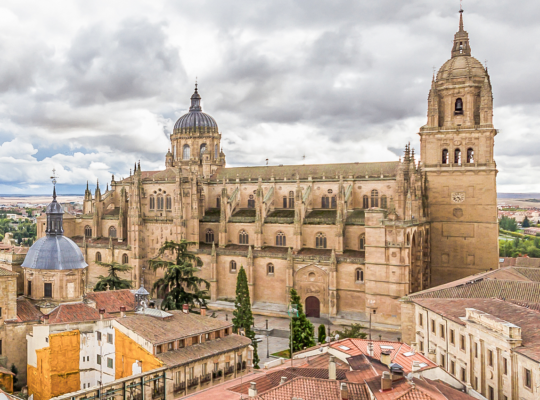
The following day, the journey leaves Zaragoza and continues to Salamanca, bringing another change in atmosphere. If Zaragoza is introduced primarily through its Marian shrine and Catholic heritage, Salamanca offers a broader experience of historic Spanish culture, with the cathedral and Plaza Mayor becoming central points of the visit. The group also celebrates a private Mass before spending the night in the city.
The transition is significant because the journey does not attempt to repeat the same experience in every city. Instead, each destination introduces something different. After spending time in Zaragoza within a strong atmosphere of Marian devotion, Salamanca allows travelers to step back and appreciate the relationship between sacred architecture, historic urban spaces, and everyday life.
This variation gives the overall journey a more natural rhythm. A pilgrimage that moved only from one shrine to another could eventually begin to feel repetitive, even when the destinations themselves are important. By including cities such as Salamanca, the itinerary allows travelers to experience faith within a wider cultural setting and to see how religious heritage exists alongside the ordinary life of a historic European city.
There is also something valuable about simply changing pace. After several days of travel, a destination where visitors can walk through historic surroundings, observe architecture, spend time in a public square, and then enter a cathedral for prayer provides a different kind of experience. The journey remains centered on faith, but it is allowed to breathe through culture and place.
Salamanca Cathedral – Faith Within a Historic City
The Salamanca Cathedral offers the group another opportunity to enter a sacred space, reflect, and celebrate Mass together. Yet the significance of the visit comes not only from the cathedral itself but from the way it exists within the wider character of Salamanca.
A historic cathedral can be appreciated from many perspectives. Its architecture may tell us something about the period in which it was built, its artistic details may reveal the values of the people who created it, and its place within the city may demonstrate how deeply religious life was connected to the development of the community. For pilgrims, however, there is another dimension: the cathedral remains a place of prayer.
That combination makes the experience particularly rich. Travelers can appreciate Salamanca as a historic city while also entering its cathedral as pilgrims. The two perspectives do not need to compete. In fact, understanding the history and cultural setting of a church can deepen the appreciation of its religious significance, while experiencing it through prayer can provide another way of understanding the city itself.
A pilgrimage journey therefore does not require travelers to choose between culture and faith. It can create opportunities to experience both, allowing the sacred and the historical to become part of the same story.
Plaza Mayor – Seeing Salamanca Beyond Its Sacred Spaces
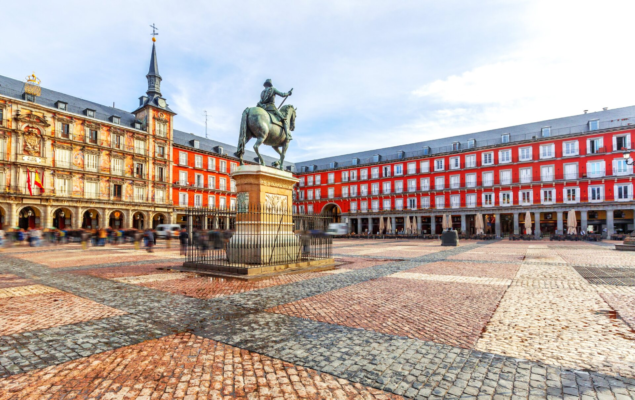
After visiting the cathedral, the journey continues to Plaza Mayor, one of Salamanca’s defining public spaces. Here, the atmosphere becomes more open and connected to everyday life. Instead of entering another church or shrine, travelers can experience the city through its streets, architecture, and the people who continue to gather in this historic setting.
These moments may seem less obviously connected to pilgrimage, but they are an important part of understanding a destination. A city is not only its religious monuments. It is also the cafés, public squares, streets, conversations, and ordinary routines that continue around those historic buildings.
For travelers from the United States, this can be a particularly interesting experience because European cities often present history in a way that feels much closer to everyday life. Historic architecture is not necessarily isolated behind a boundary or preserved only as a museum exhibit; it can remain part of the environment in which people live and gather every day.
Walking through a place such as Plaza Mayor therefore allows the group to experience Salamanca beyond its churches. It offers a moment to appreciate the beauty of the city without the need to turn every experience into a formal sightseeing stop. A slower walk, a conversation with another traveler, or simply taking time to observe the surrounding architecture can become part of the memory of the journey.
These quieter experiences also provide balance. A pilgrimage itinerary can be deeply prayerful without requiring every moment to be solemn. There is room for reflection, worship, discovery, conversation, and simple enjoyment of being together in a beautiful place.
Two Cities, Two Expressions of Catholic Heritage
Zaragoza and Salamanca become particularly interesting when viewed together because they reveal two different ways in which faith and culture can shape a city.
In Zaragoza, the experience is centered strongly on Marian devotion, with the Basilica of Our Lady of the Pillar and the Sacred Pillar providing the spiritual focus. The Cathedral of the Savior and Basilica of Santa Engracia then broaden the experience into the city’s wider Catholic heritage. In Salamanca, the cathedral remains an important place of prayer, but the experience expands naturally into the historic character of the city itself, particularly through the atmosphere of Plaza Mayor.
The difference between the two cities is not something the journey needs to overcome. It is part of what makes the journey meaningful. One destination allows pilgrims to enter more deeply into Marian devotion, while the other gives them an opportunity to experience how faith, architecture, history, and everyday life can coexist within a historic city.
This variety also prevents the journey from becoming a simple collection of similar religious sites. Instead, each destination contributes a different emotional and cultural texture. Barcelona introduces the distinctive artistic and architectural identity of Catalonia; Zaragoza brings the group into a strong Marian tradition; Salamanca offers a quieter encounter with historic Spain; and Fatima will later bring the pilgrims into another major Marian center.
The result is a journey in which every destination has a reason to be remembered.
From Salamanca to Fatima – A Natural Continuation of the Pilgrimage
After Salamanca, the journey continues toward Fatima, where the spiritual atmosphere becomes more explicitly centered on the Marian pilgrimage experience. The program includes two nights in Fatima, with visits to the Basilica of Our Lady of the Rosary, prayer at the tombs of the visionaries, and a visit to Aljustrel if the schedule permits. The following day includes the Chapel of the Apparitions, the Way of the Cross through Valinhos to Loca do Cabeço, a private Mass, and participation in the Marian procession and candlelight procession with thousands of pilgrims from around the world.
Seen from this perspective, Zaragoza and Salamanca are not simply two stops placed between Barcelona and Portugal. They create an important transition within the journey. The experience moves gradually from Barcelona’s cultural and architectural character into Zaragoza’s Marian devotion, then into Salamanca’s historic atmosphere, before continuing toward Fatima and another major center of Marian pilgrimage.
This progression gives the traveler time to experience different dimensions of Spain before crossing into Portugal. Rather than treating the journey as a race between major pilgrimage sites, the itinerary allows the cultural landscape between those destinations to become part of the experience as well.
For a pilgrim, this can be particularly meaningful because faith is never entirely separate from the places in which people live it. Churches, shrines, historic squares, architecture, local traditions, and community life all form part of the context in which religious traditions have been carried from one generation to another.
Why the Less Familiar Stops Can Become Meaningful
The most famous destinations on a journey are often the easiest to remember before the journey even begins. Travelers already know what the Eiffel Tower looks like, have seen photographs of the Sagrada Família, and may recognize the name Fatima long before they arrive. Cities such as Zaragoza and Salamanca can offer something different because they invite travelers to discover rather than simply confirm what they already know.
That sense of discovery can make the experience more personal. Instead of arriving with a fixed image of what the city will be, travelers begin to notice details as they encounter them: the atmosphere of a basilica, the quiet of a cathedral, the architecture surrounding a historic square, or the way modern life continues within an old city.
For a pilgrimage journey, these discoveries can become especially meaningful because they add context to the spiritual experience. A shrine does not exist in isolation; it belongs to a city and a community. A cathedral is not simply an architectural monument; it has been part of the religious life of its surroundings. A public square is not merely a beautiful setting; it is a place where generations of people have gathered and where contemporary life continues today.
Traveling through these places allows pilgrims to see faith not only through formal acts of worship but also through the physical and cultural environments that have developed around them.
What Might Stay With You From Zaragoza and Salamanca?
After returning home, travelers may not remember every street or every detail of the itinerary, but certain moments often remain because they have become connected to personal experience.
In Zaragoza, it may be the sight of the Basilica of Our Lady of the Pillar, the opportunity to venerate the Sacred Pillar, or the experience of celebrating Mass at the shrine. It may be the awareness that generations of pilgrims have entered that same sacred space carrying their own intentions, making the personal prayer of today part of a much longer tradition.
In Salamanca, it may be the cathedral, the historic surroundings, or the atmosphere of Plaza Mayor. Perhaps it will be a quiet moment during the walk through the city, a conversation with someone in the group, or the simple experience of discovering a place that was less familiar before the journey began.
These memories do not have to be dramatic in order to be meaningful. In fact, some of the moments that remain longest are often the ones that were not planned as the highlight of the day. They happen while walking, looking, listening, praying, or simply being present.
That is one of the reasons a pilgrimage can become more than a collection of destinations. The places provide the setting, but the meaning comes from the way each traveler experiences them.
Two Cities, Two Stories Within One Journey
Zaragoza and Salamanca demonstrate that a meaningful pilgrimage does not need every destination to offer the same type of experience. Zaragoza invites pilgrims into a Marian tradition centered on Our Lady of the Pillar and surrounded by centuries of Catholic heritage. Salamanca introduces another side of Spain, where cathedral, historic architecture, public spaces, and everyday life come together to create a very different atmosphere.
Together, they form an important part of the journey between Barcelona and Fatima. They allow travelers to experience more than the most familiar images of Spain and to discover places where faith and culture continue to exist side by side. The experience is not about choosing which city is more important; rather, it is about allowing each destination to contribute its own story to the journey.
By the time the group leaves Salamanca and continues toward Fatima, these experiences have already become part of a larger pilgrimage that began in Paris and Lourdes and will eventually lead to Lisbon, Assisi, Rome, and Vatican City. Each destination changes the rhythm slightly, introduces another story, and offers another opportunity to reflect.
Perhaps that is what makes a journey across several countries so memorable. The value of each place does not come from how famous it is, but from what it adds to the story of the journey.
Zaragoza may remain in memory as the city where pilgrims stood before the Sacred Pillar and celebrated Mass at the shrine of Our Lady. Salamanca may be remembered through its cathedral, its historic surroundings, and the open atmosphere of Plaza Mayor. Neither destination needs to be reduced to a single image, because both offer something more lasting: an opportunity to encounter Spain through its faith, its history, its architecture, and the people who continue to give those places life.
And as the road continues toward Fatima, the journey carries those experiences forward, reminding us that pilgrimage is not simply about reaching sacred destinations. It is also about taking the time to understand the places along the way, allowing each one to reveal something different, and carrying those discoveries with us as the journey continues.