Places & Experiences
Santiago de Compostela – The Final Destination of the Camino de Santiago
A city where the journey matters as much as the destination
Across Europe, countless cities are celebrated for their architecture, museums, or breathtaking landscapes. Yet there is one city where the journey itself is just as meaningful as the place you arrive.
That city is Santiago de Compostela, located in the northwestern region of Galicia, Spain.
For centuries, it has been the final destination of the Camino de Santiago, one of the world’s oldest and most significant Christian pilgrimage routes. Every year, hundreds of thousands of pilgrims and travelers from around the globe make their way here – not only because of its religious importance, but also because of the personal transformation many experience along the way.
The Camino de Santiago: A Journey Through Faith and History
Unlike many pilgrimage destinations that focus on a single sacred site, Santiago de Compostela is inseparable from the path that leads to it.
The Camino de Santiago, or the Way of St. James, is a network of ancient pilgrimage routes stretching across Spain, Portugal, and France. Since the Middle Ages, pilgrims have walked these paths to reach the Cathedral of Santiago de Compostela, traditionally believed to house the relics of Saint James the Apostle.
Today, the Camino welcomes not only Catholic pilgrims but also hikers, history enthusiasts, and travelers seeking reflection, cultural immersion, or simply the experience of walking through some of Europe’s most beautiful landscapes.
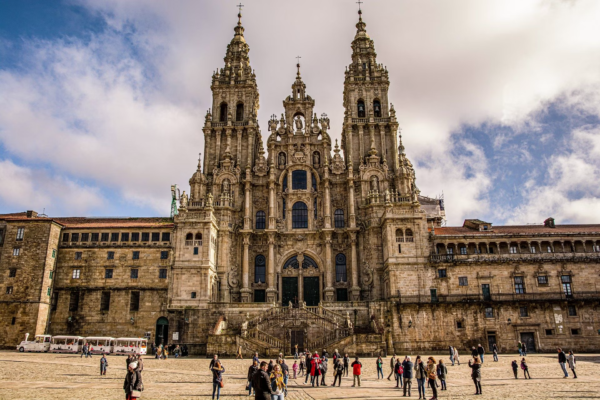
Santiago de Compostela Cathedral
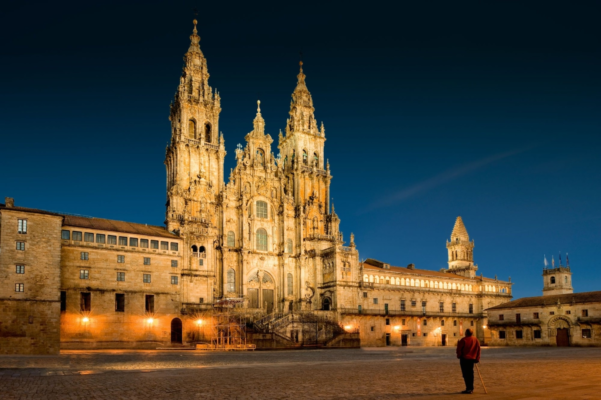
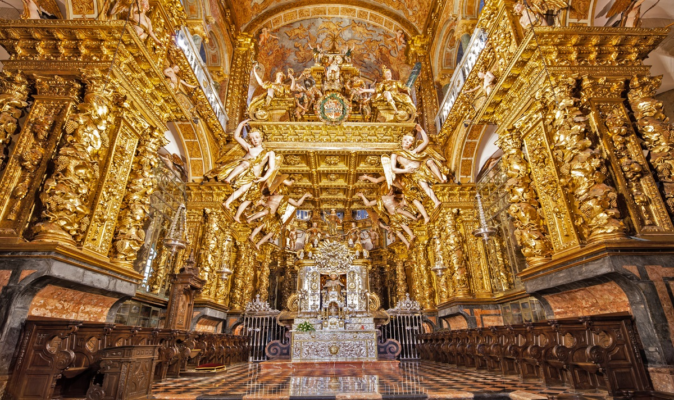
At the heart of the city stands the magnificent Cathedral of Santiago de Compostela, an architectural masterpiece that has welcomed pilgrims for nearly a thousand years and is recognized as a UNESCO World Heritage Site.
The square in front of the cathedral, Praza do Obradoiro, is often filled with emotional moments. Some pilgrims arrive after walking hundreds of kilometers over several weeks, while others quietly pause in gratitude, prayer, or reflection.
It is these deeply personal moments that make the cathedral far more than a historic monument—it becomes the symbolic conclusion of an unforgettable journey.
A City with a Timeless Atmosphere
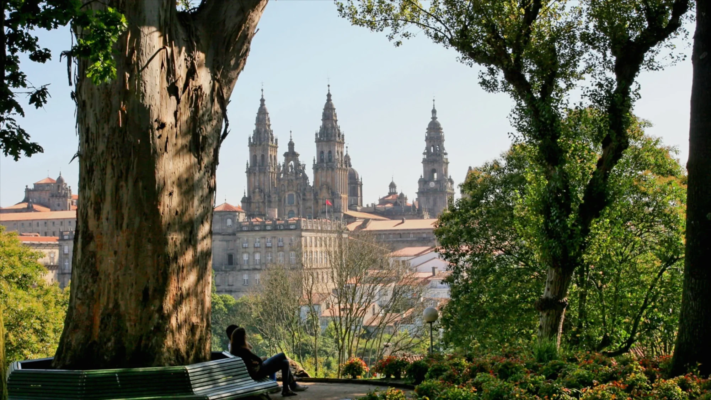
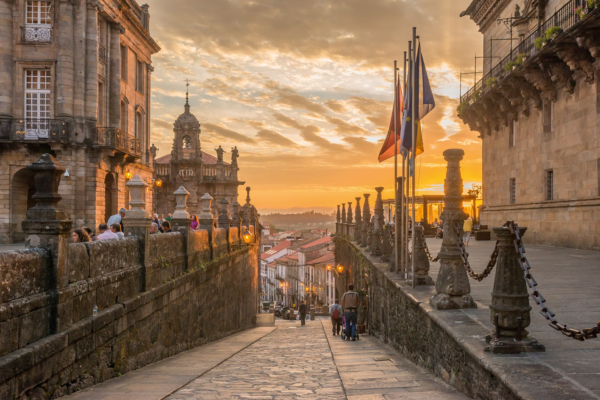
Beyond its spiritual significance, Santiago de Compostela charms visitors with its medieval streets, granite buildings, lively plazas, and welcoming cafés.
Despite its relatively small size, the city is always vibrant, thanks to the steady flow of pilgrims arriving from every corner of the world. Each traveler carries a unique story, creating an atmosphere unlike anywhere else in Europe.
Rather than rushing from one attraction to another, many visitors simply enjoy wandering through the Old Town, soaking in the peaceful rhythm of daily life and appreciating the city’s rich cultural heritage.