Pilgrimage Leisure

Spain

Echoes of Empire

🌍 Europe / Spain
💰 Euro
Best: Apr - Jun, Sept - Oct
💬 Spanish; English
🕐

A pilgrimage to Spain is not simply a trip, but a journey of the soul — a time when each traveler is invited to set aside the busyness of daily life and enter into moments of prayer, reflection, and a deeper encounter with God.

Spain is a land rich in Catholic faith, long history, and vibrant culture. From ancient cathedrals and pilgrimage centers to cities shaped by Christian heritage, stone streets, public squares, and sacred art, each destination opens a story of faith, perseverance, and spiritual beauty preserved through many centuries.

This handbook has been prepared as a small companion throughout the journey. Its purpose is to help travelers understand the essential information before departure, learn more about the pilgrimage sites they will visit, and prepare carefully both in practical matters and in spirit.

Please read this handbook carefully before the trip so the pilgrimage may be smooth, prayerful, and deeply meaningful.

Documents & Visa

When traveling on a pilgrimage, travelers must bring a valid passport that remains valid for at least 6 months after the date of return to the United States. If missing documents prevent a traveler from departing or entering the destination country, Carnival US is not responsible, and the standard tour cancellation policies will still apply.

Please note that a Passport Card is not valid for international air travel.

For journeys to Spain, travelers will enter a country within the Schengen Area. Spain is expected to apply ETIAS requirements for U.S. citizens once the system officially begins. Carnival US can assist travelers with completing the ETIAS registration process before departure according to entry requirements. Please contact the office for specific processing fees and estimated processing time.

Carnival US Visa Assistance Service

Carnival US provides visa assistance services for Green Card holders. This service includes assistance with preparing the application package, submitting the application, providing flight information, invitation letters, and guidance on preparing documents for the biometrics appointment at the nearest consulate. Travelers should allow at least 2 months for the visa application process.

This service requires an additional fee. Please contact the office for specific pricing and processing time.

Travelers should make copies of their passport and visa and send a copy to a trusted friend or family member. Copies should also be kept separately from the original documents in case the originals are lost.

Luggage

Q&A: How many checked bags may travelers bring?

For this pilgrimage journey, each traveler is generally allowed to bring:

One (1) checked bag

One (1) carry-on bag

One (1) personal item

Specific baggage rules may vary depending on the airline listed on the ticket.

Checked Baggage

Checked baggage should include most personal belongings such as clothing, shoes, toiletries, toothpaste, face towels, toothbrushes, fruit knives, metal items, razors, food, beverages, liquids, and other larger personal items.

If your baggage exceeds the airline’s permitted weight limit, additional baggage fees may apply. These fees are the traveler’s responsibility and will depend on the policy of each airline.

Do not place important documents, passports, money, bank cards, jewelry, or valuable items in checked baggage. Travelers should always keep these items with them in a carry-on bag, personal bag, waist pouch, or crossbody bag.

Allowed Size and Weight for Checked Baggage

The total length + width + height should not exceed 62 inches / 158 cm.

Economy Class: One (1) checked bag up to 50 lbs / 23 kg.

Business Class: Two (2) checked bags, with each bag up to 75 lbs / 32 kg.

Note: During a pilgrimage, travelers will move through many locations. It is strongly recommended to pack light and neatly for easier transportation between hotels, airports, pilgrimage sites, and sightseeing areas.

Carry-On Baggage

Carry-on baggage should include small electronics such as a phone, camera, laptop, regular travel camera, money, important documents, medication, and other valuable items. Travelers are also encouraged to pack one extra set of clothing and any personal medication in the carry-on bag.

Throughout the trip, travelers are responsible for taking care of their own carry-on items. Money, passport, visa, and important documents should always be kept with the traveler.

Allowed Size and Weight for Carry-On Baggage

One (1) carry-on bag: total length + width + height should not exceed 42 inches / 106 cm.

The carry-on bag should not exceed 17 lbs / 8 kg.

Important: The baggage information above is based on general international travel guidelines. However, each airline may have its own baggage requirements. Carnival US will provide the specific airline baggage rules before departure so travelers can prepare accordingly.

Q&A: What should I do if my luggage is lost?

If your luggage is lost, please go immediately to the airport Lost and Found office or airline baggage service counter to file a lost baggage report. The tour guide will assist travelers with the form when possible.

Please keep all documents, claim tags, and written confirmation provided by the airline. Once the luggage is found, the airline will usually arrange delivery to the hotel.

Travelers should provide the correct hotel address listed on the luggage tag issued by Carnival US before the flight.

Hotels

Hotels used by Carnival US during the pilgrimage are generally 4-star standard. However, at certain pilgrimage destinations, hotels may be simpler and focused more on comfort and practicality rather than luxury service. Travelers should understand that a pilgrimage is different from a leisure vacation. The purpose of the journey is centered on sacred places, prayer, and meaningful experiences rather than luxury accommodations, so expectations should be adjusted accordingly.

Carnival US will send travelers detailed hotel information by email, including hotel names, addresses, and ratings. Most hotels provide basic amenities similar to what travelers may expect at home. However, single rooms may be smaller in size, and some rooms may have a queen bed instead of larger bedding arrangements.

CHECK-IN / CHECK-OUT

Hotel check-in is usually between 2:00 PM and 4:00 PM. Hotels will try to accommodate early check-in when possible. However, if rooms are not ready, travelers may store their luggage at the hotel and spend free time exploring the surrounding area. Travelers may ask the tour guide for suggestions on nearby places to visit or rest while waiting.

Hotel check-out is usually between 11:00 AM and 12:00 PM. To make check-out easier, travelers should carefully check all drawers, nightstands, closets, the bathroom, and the hotel safe before leaving the room. Please make sure no jewelry, cash, passport, documents, chargers, or personal items are left behind.

ROOM KEYCARD

Many hotels use keycards to operate room electricity, lights, or elevators. The layout of switches and electrical outlets may be different from one hotel to another, so travelers may need to look around the room to find the correct switches.

Travelers should keep the room keycard with them during the stay because it may be used for several purposes:

To open the room door.

In many hotels, the keycard must be inserted into a slot near the door to activate electricity and outlets inside the room.

When using the elevator, travelers may sometimes need to tap or scan the keycard before selecting the floor.

ADDITIONAL HOTEL SERVICES

Most hotels offer paid TV or entertainment services. If travelers do not wish to use this service, please do not press the PAY button. If the button is pressed, the hotel may charge the room even if the movie or program is not watched. The minimum charge may be around 25 EUR per movie, depending on the hotel.

Some hotel rooms may also have sensor-based minibars. If an item is moved, lifted, or used, the system may automatically record it and charge the room according to the hotel’s policy.

BATHROOM

All rooms have private bathrooms. Most hotels provide a hair dryer and basic toiletries, but travelers should still bring their own personal items. Hotels usually provide large bath towels and face towels, but small washcloths may not always be available.

PLEASE BE CAREFUL IN HOTEL BATHROOMS

In many hotels in Spain, bathtubs may have high sides and can be difficult to step into or out of. Travelers should place a towel on the floor and be especially careful to avoid slipping. Carnival US always tries to request walk-in showers when possible, but hotels may not always be able to provide them, especially during peak travel seasons.

ROOM CLEANING

Many hotels today may not clean rooms daily as frequently as in the past. This may be due to staffing, cost, sustainability practices, or hotel policy. Some travelers also choose not to request daily room cleaning.

If travelers would like daily room cleaning, they may request it from housekeeping, and the hotel will try to assist when possible.

PERSONAL ITEMS TO PREPARE

Hotels usually provide basic amenities such as towels, soap, shampoo, and Wi-Fi. However, travelers are encouraged to prepare additional personal items, including:

Travel-size toiletries such as toothpaste, toothbrush, shampoo, body wash, and other personal hygiene items.

Personal medication and common medicine, such as motion sickness medicine, headache medicine, allergy medicine, and digestive medicine.

Tissues, sunscreen, and lip balm.

Bandages, ointment, vitamins, and basic first-aid items.

A pen for filling out forms.

Any other personal items needed during the trip.

If travelers need to purchase additional items during the journey, they may ask the tour guide or hotel front desk for assistance.


Flights & Airport

Spain has several major international airports, including:

Madrid Barajas Airport (MAD)
Barcelona El Prat Airport (BCN)

Compared with many other international airports in Europe, these airports are large, modern, and well organized, with convenient transportation between terminals.

About 3 weeks before departure, Carnival US will email travelers important flight information, including the flight itinerary, flight numbers, and each traveler’s electronic ticket number.

Please note that this document is not a boarding pass. Travelers will receive the boarding pass after check-in, usually 24 or 48 hours before departure, depending on the airline.

Travelers may check in online 24 hours before the flight or check in at the airline counter at the airport.

If the seat assignment or flight segment is missing from the electronic ticket, please do not worry. The airline will usually update this information about 7–10 days before departure.

Seat Assignment

Airline systems usually assign seats about 24 hours before departure. Travelers who wish to choose a specific seat may visit the airline website and pay any applicable seat selection fees directly through the airline.

Q&A: What should I do if I have TSA PreCheck or Global Entry?

If you have TSA PreCheck or Global Entry, please inform the airline counter staff at the airport so they can help ensure TSA PreCheck appears on your boarding pass when applicable.

Q&A: How early should I arrive at the airport?

For domestic flights, travelers should arrive at the airport at least 2 hours before departure.

For international flights, travelers should arrive at the airport at least 3 hours before departure.

Q&A: Where can I find my flight itinerary?

Carnival US will provide the flight itinerary by email. The itinerary will show the airline, flight number, departure time, and arrival time.

Special Requests

If travelers need a special meal, such as a vegetarian meal or child meal, or need wheelchair assistance to the boarding gate, please contact Carnival US as early as possible. Special requests are subject to airline availability and approval.

Q&A: Why does my ticket show one airline, but I check in with another airline?

Many airlines work together through codeshare flights. For example, a ticket may show United Airlines, but the flight may be operated by Lufthansa. In this case, travelers may need to check in with the airline that operates the flight.

Q&A: What happens if I want to change my ticket at the last minute?

If a traveler wants to change the flight ticket after it has been issued, additional fees may apply according to the airline’s ticket change or cancellation policy. The traveler may also need to pay any fare difference between the original ticket and the new ticket.

For this reason, travelers should carefully check all flight information as soon as they receive the ticket to avoid mistakes and unnecessary additional costs.

IMMIGRATION / ARRIVAL PROCEDURES

Q&A: What should I do when the airplane lands?

When the airplane lands, travelers should carefully check all luggage and personal belongings to avoid leaving anything behind on the aircraft. After exiting the plane, travelers will be guided through immigration procedures and baggage claim.

Please follow the instructions and the tour guide’s flag to the designated meeting area to avoid getting separated from the group.

If you do not see your tour guide or driver, please look around the nearby area, as they may have stepped away briefly to assist another pilgrim. If you still cannot find them, contact the tour guide using the phone number provided in the final confirmation email.

Important Note: Travelers should not say words related to aviation security threats, such as “bomb” or “explosive,” in any language while at the airport, during baggage check-in, security screening, or on the airplane. Such words may cause serious delays, security questioning, or legal consequences.

US Customs & Border

U.S. citizens and permanent residents who have been in Europe for more than two days may generally return to the United States with up to $800 worth of goods duty-free, as long as the items are for personal use and accompany the traveler upon return.

For travelers who wish to bring back more goods, a flat duty rate of 3% may apply to the next $1,000 worth of purchases.

Travelers should keep all purchase receipts in case U.S. Customs officers request a declaration upon return to the United States.

For more details, please visit the U.S. Customs and Border Protection website:
https://www.cbp.gov/travel

Money & Payment

The countries visited by our group use the Euro.

Currency Exchange Rate: Exchange rates may change depending on the time of travel. As a general reference, 1 EUR is approximately equal to 1.17 USD. Travelers should check the current exchange rate before departure.

Q&A: Where can I exchange money?

Travelers are encouraged to exchange U.S. dollars for Euros at their bank in the United States before departure. Many banks allow customers to order Euros in advance and pick them up about one week later. It is recommended to request some smaller denominations for easier daily use.

Legal currency exchange offices can be found at airports, major cities, and towns. Banks may also exchange money, but they can be crowded and may not always offer the best exchange rates.

ATMs in Spain are also a safe and convenient option for withdrawing Euros, but transaction fees may apply depending on your bank and card type.

Q&A: Can I use credit cards in Spain?

Yes. Visa and MasterCard are widely accepted in Spain and are generally convenient, safe, and offer reasonable exchange rates. American Express and Discover are less commonly accepted.

ATMs are available in most cities and are especially common in central areas, particularly in major cities such as Madrid and Barcelona.

Before departure, travelers should notify their bank and credit card companies that they will be traveling to Spain. This helps prevent cards from being blocked or temporarily suspended due to unusual international transactions.

Pickpocketing can be common in crowded tourist areas in Europe, especially in busy areas of Spain such as Barcelona and Madrid. Travelers should be careful with personal belongings, documents, and money. Avoid wearing valuable jewelry while traveling. Cash should be divided and kept in separate places close to the body.

Q&A: Can I pay by phone?

Yes. Apple Pay, Google Pay, and international payment cards can be used at many service locations during the journey. These payment methods are especially common at shops, restaurants, hotels, and public transportation services in Spain.

Tax Return

Goods in Europe can be expensive, and VAT is often high. In Spain, the standard VAT rate is commonly around 21%. When purchasing eligible goods with a value of €150 or more, travelers may be able to request a VAT refund.

To receive a VAT refund, travelers must ask the store to prepare the proper Tax Free Form / VAT Refund Form at the time of purchase. Please keep the original receipt, VAT refund form, passport, boarding pass, and purchased items easily accessible.

At the airport, travelers may need to present the VAT refund form and the purchased goods to customs officers before leaving Europe. After the form is validated, the refund may be received directly at the airport or returned to a credit card, depending on the refund company and the traveler’s selected refund method.

If purchases are made in another European Union country, travelers must still obtain the Tax Free Form from the store and keep the purchased items available for inspection at the final airport before departing Europe. Waiting time may be long depending on the number of travelers and the availability of staff at the refund or customs counter.

Please note that the refund amount is usually not the full VAT amount, as service fees may be deducted by the tax refund company. Travelers should keep all receipts and forms carefully and should avoid using or packing purchased items deep inside checked luggage before completing the VAT refund process.

Weather & Clothing
Season Location Average Temp Notes
Spring: March – May Barcelona 12°C – 20°C Cool and pleasant, with possible light rain. Bring a light jacket, a scarf, comfortable walking shoes, and a small umbrella or light raincoat.
Spring: March – May Zaragoza 9°C – 22°C Cool to mild weather, with warmer afternoons. Bring layers, a light jacket, and comfortable shoes for walking.
Spring: March – May Salamanca 6°C – 19°C Cooler than Barcelona, especially in the morning and evening. Bring a jacket, scarf, and comfortable walking shoes.
Summer: June – August Barcelona 22°C – 30°C Warm to hot, especially during the day. Bring light but modest clothing, a hat, sunglasses, sunscreen, water, and comfortable walking shoes.
Summer: June – August Zaragoza 20°C – 34°C Hot during the day, especially in open areas. Bring sun protection, breathable clothing, water, and a light jacket for cooler evenings if needed.
Summer: June – August Salamanca 16°C – 30°C Warm to hot during the day, but evenings may feel cooler. Bring breathable clothing, sun protection, and a light layer for the evening.
Autumn: September – November Barcelona 14°C – 24°C Pleasant weather overall, with cooler evenings. Bring a light jacket, scarf, and comfortable walking shoes.
Autumn: September – November Zaragoza 11°C – 24°C Mild and comfortable, but evenings can become cooler later in the season. Bring layers and a light jacket.
Autumn: September – November Salamanca 8°C – 22°C Comfortable during the day, cooler in the evening. Bring a light warm jacket, scarf, and comfortable shoes.
Winter: December – February Barcelona 8°C – 15°C Cold to mild, with possible rain. Bring warm clothing, a jacket, scarf, gloves, and an umbrella.
Winter: December – February Zaragoza 4°C – 11°C Cold weather, especially in the morning and evening. Bring a warm coat, scarf, gloves, and comfortable closed-toe shoes.
Winter: December – February Salamanca 1°C – 10°C One of the colder areas on the route. Bring a warm coat, scarf, gloves, layers, and comfortable walking shoes
Pilgrimage Clothing

Travelers are encouraged to pack one set of clothing for the day, a jacket, prescription medication, and a few essential toiletries in the carry-on bag. This will be helpful in case checked luggage is delayed or lost. Please do not place sharp metal objects or prohibited items in your carry-on baggage.

During pilgrimage journeys in Europe, many sightseeing and pilgrimage sites require walking. In some major cities, tour buses may not be allowed to enter the city center or certain historic areas, so travelers should be prepared to walk longer distances.

Comfortable walking shoes are strongly recommended. Travelers should wear sneakers or flat shoes that have already been worn before to avoid foot pain during the journey. Women are advised not to wear high heels, as many areas may include stone streets, steps, uneven ground, and long walking routes.

In many European hotels, toothpaste, toothbrushes, and room slippers may not be provided. Travelers should bring their own personal toiletries and slippers if needed.

Hotel laundry service may be available, but it is usually expensive. Since the group will move between different cities and hotels during the pilgrimage, travelers should carefully consider whether to use hotel laundry service and should pack accordingly.

Communication & Internet

Hotel phone calls can be very expensive. Travelers are encouraged to use a European phone card, purchase an eSIM, or activate an international roaming plan from the United States. International roaming plans often cost around $10–$12 per day, depending on the mobile carrier and destination.

For international roaming service, travelers should contact their mobile provider before departure, such as AT&T, Verizon, or T-Mobile, to choose the most suitable roaming plan. Prices and coverage may vary depending on the destination and carrier.

Reference links for mobile carrier roaming services:

Verizon TravelPass

AT&T International Plans

T-Mobile International Roaming Plans

Travelers may also use an eSIM to stay connected during the trip. eSIM prices for Spain usually vary depending on data amount and length of use. Common price ranges are:

Short plan, 5–7 days, 1–3GB: approximately $5–$10

Medium plan, 7–15 days, 5–10GB: approximately $10–$25

Large plan, 15–30 days, 10–20GB or more: approximately $20–$40

Most hotels provide free Wi-Fi for guests. Travelers may use iMessage, Viber, WhatsApp, or other internet-based apps to contact family and friends when they return to the hotel.

Emergency Numbers

In case of an emergency in Spain, travelers may call the following numbers:

112 – General emergency number in Spain for police, ambulance, and fire services.

091 – Spanish National Police.

092 – Local Police.

061 – Medical emergency / ambulance.

080 – Fire department.

Special Note for Travelers

For a real emergency, the easiest and most practical number to remember is 112.

If you are separated from the group, stay in a visible and easy-to-recognize location and call the tour guide immediately.

If you lose an item at a hotel, airport, restaurant, church, pilgrimage site, or tourist area, report it to the nearest staff member, security point, or tour guide as soon as possible.

For minor health issues, inform the tour guide so they can help you contact the hotel, local guide, pharmacy, clinic, or emergency service if needed.

Electricity

In Spain, the standard electricity supply is generally 220V / 50Hz. Travelers should bring a suitable European power adapter. The most common plug types in Spain are Type C and Type F, which use two round pins.

Travelers are encouraged to prepare a universal multi-adapter for convenience throughout the journey. A universal adapter can be purchased before departure from stores such as Amazon or Walmart.

Before using hair dryers, curling irons, electric shavers, chargers, or other electronic devices, please check that the device supports 100–240V. If a device only supports 110V, a voltage converter may be needed.

Safety

Spain is a beautiful and welcoming destination with rich Catholic heritage, historic cities, and vibrant local culture. However, travelers should remain aware of their surroundings, especially in crowded areas such as airports, train stations, city centers, churches, pilgrimage sites, markets, restaurants, and tourist attractions.

Pickpocketing can occur in busy tourist areas, especially in major cities such as Barcelona and Madrid. Travelers should keep passports, cash, bank cards, phones, and important documents secure at all times. Do not keep all valuables in one bag, and avoid placing your wallet or phone in your back pocket. A crossbody bag or front-worn bag is recommended for daily sightseeing.

When visiting churches, cathedrals, museums, historic streets, plazas, or pilgrimage sites, please stay with the group and follow the tour guide’s instructions. Some areas may be crowded, and it is easy to become separated from the group if travelers walk away on their own.

Many European city centers have stone streets, steps, uneven sidewalks, and areas where tour buses cannot enter. Comfortable walking shoes with good grip are strongly recommended. Travelers should avoid high heels or brand-new shoes during the pilgrimage.

Do not accept packages, luggage, food, drinks, or personal items from strangers. Travelers should only carry their own belongings and should not agree to transport anything for another person.

If you become separated from the group, stay in a visible and easy-to-recognize location and call the tour guide immediately. Do not leave the area on your own unless instructed by the tour guide or Carnival US.

At hotels, keep valuables in a safe place and lock your room when leaving. If going out during free time, travel with others when possible and inform the tour guide if needed.

Carnival US is not responsible for lost personal belongings, accidents caused by personal negligence, or issues resulting from failure to follow safety instructions.

Food & Dining

Meals included: Daily breakfast at hotel + dinners (European or Asian style, depending on the day).


What to Expect

  • European dinners: 3 courses — starter, main, dessert. Bread, meat, fish, or local dishes.
  • Asian dinners: 4–5 dishes + fruit or dessert.
  • Note: European meals may be heavier on meat and lighter on vegetables than you’re used to.

Bringing Your Own Food

You’re welcome to pack personal snacks (instant noodles, sauces, light bites). However, bringing outside food into restaurants is generally not convenient, and requesting hot water at European restaurants may not always be possible.


Spanish Food Highlights 🍽️

Don’t miss the chance to try:

  • Paella – saffron rice with seafood or meat
  • Tapas – small sharing plates, great for variety
  • Jamón – cured ham, a Spanish staple
  • Tortilla Española – Spanish omelette
  • Churros – fried dough with chocolate
  • Olive oil bread – simple but iconic

Spanish cuisine follows the Mediterranean diet — fresh vegetables, olive oil, seafood, and seasonal ingredients.


Dining Culture 🌿

Spaniards eat slowly and socially. Meals are a moment to relax and connect — embrace it as a natural pause in your journey.


⚠️ Please inform the organizer in advance if you have any food allergies, dietary restrictions, or special meal requirements. An open mind goes a long way — Spanish flavors may be different, but often surprisingly enjoyable!

Local Cuisine
Paella
Paella
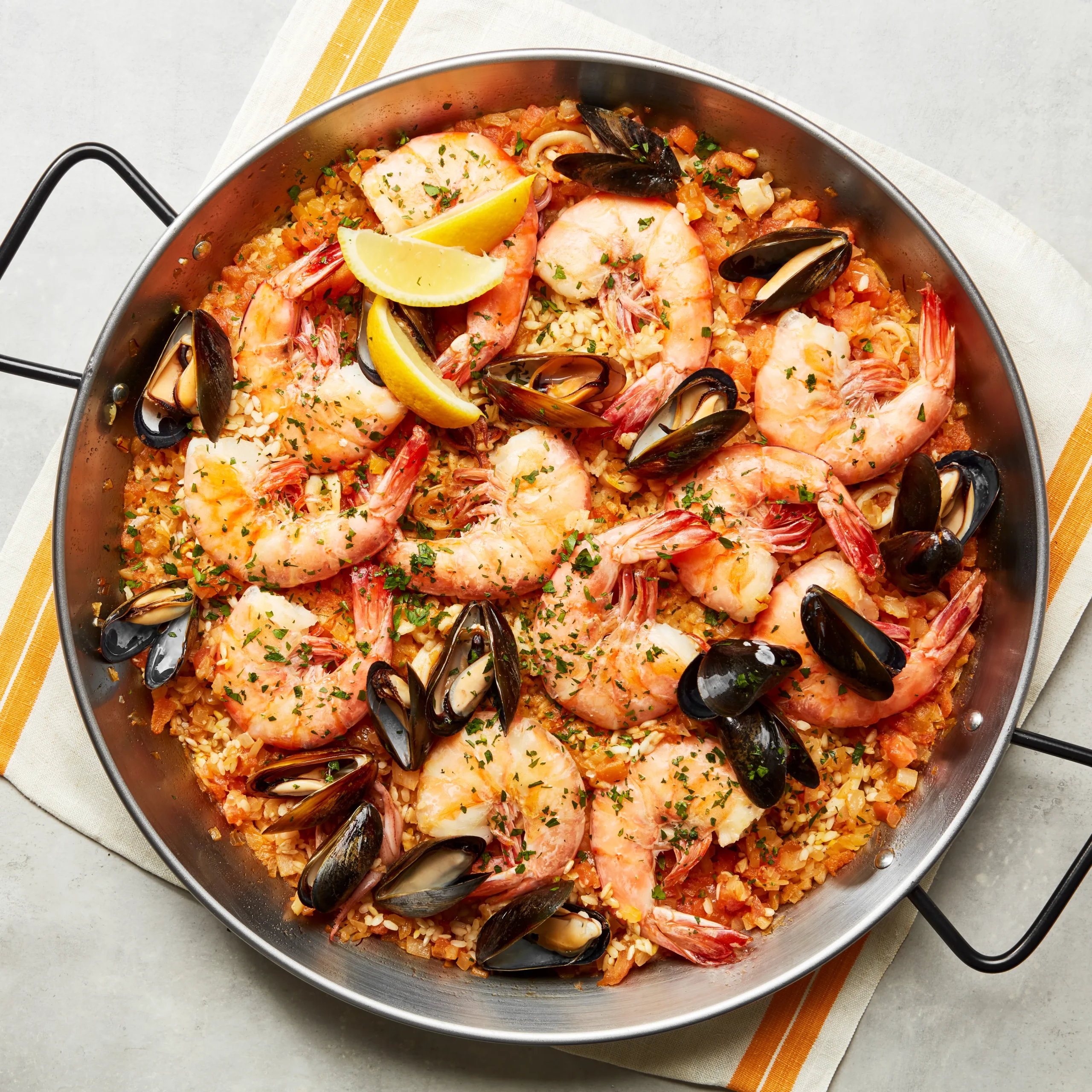
A famous Spanish rice dish often cooked with saffron, seafood, chicken, vegetables, or other local ingredients. It is one of the most iconic dishes travelers may try in Spain.
Tapas
Tapas
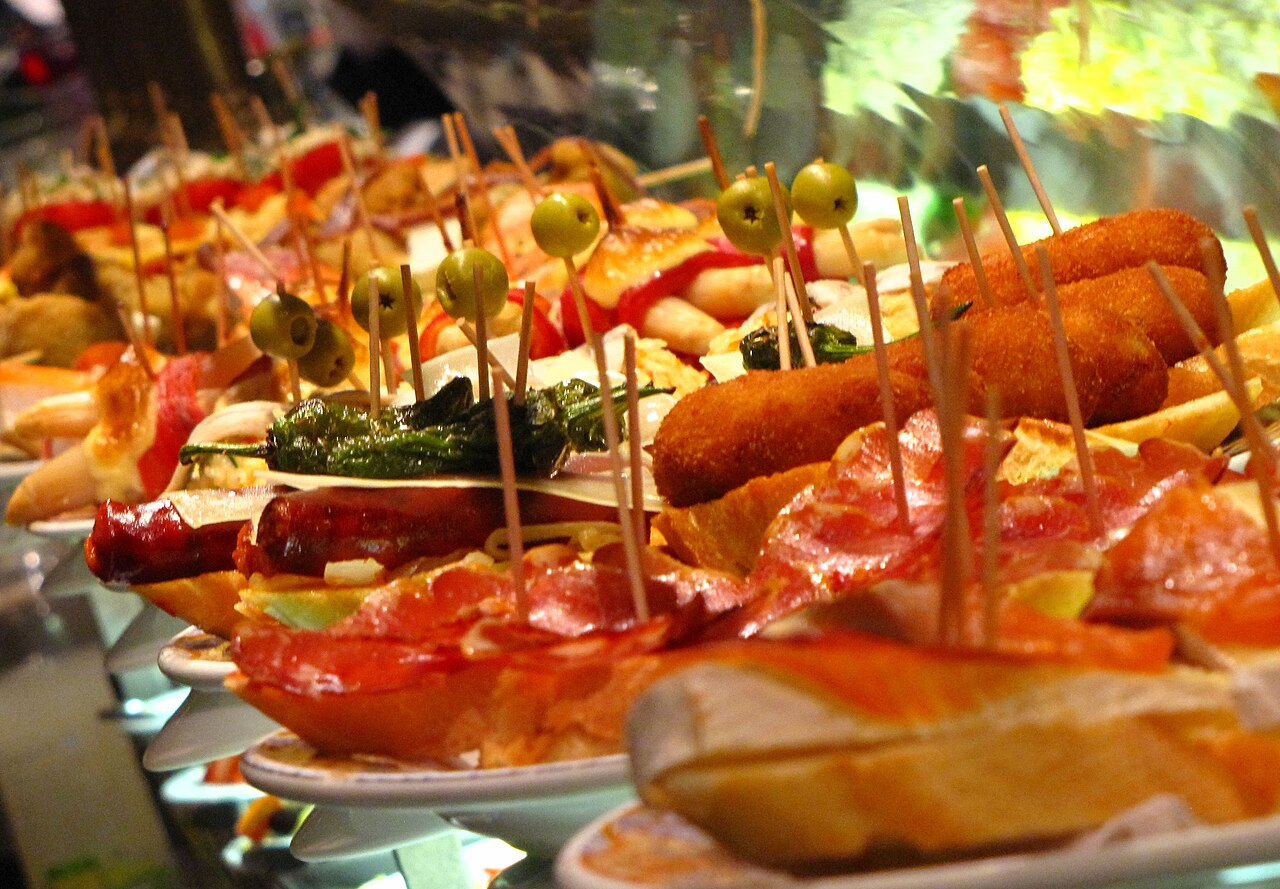
Small shared dishes served as appetizers or light bites. Tapas may include seafood, meats, cheese, olives, potatoes, or vegetables and are a classic part of Spanish dining culture.
Tortilla Española
A traditional Spanish omelet made with eggs, potatoes, and sometimes onions. It is simple, filling, and commonly served as a tapa or light meal.
Jamón Ibérico / Spanish Ham
A famous cured ham known for its rich flavor and delicate texture. It is often served thinly sliced with bread or as part of a tapas selection.
Churros con Chocolate
Fried dough pastries served with thick hot chocolate for dipping. This is a popular Spanish treat, especially for breakfast, dessert, or an afternoon snack.
Pan con Tomate
Toasted bread rubbed with tomato, olive oil, and sometimes garlic. It is especially popular in Catalonia and is simple, fresh, and easy to enjoy.
Pilgrimage Site Overview

Spain does not simply invite you to visit — it calls you to enter.

This pilgrimage traces a path through some of the most sacred ground in the Catholic world. In Barcelona, you will stand inside the soaring nave of Sagrada Família — Antoni Gaudí’s unfinished masterpiece, a cathedral over 140 years in the making, where every column, every arch, and every beam of colored light tells the story of Christ’s life, death, and resurrection. You will also pray in the quiet grandeur of Santa Maria del Mar, a Gothic church built stone by stone by the hands of ordinary fishermen who offered what little they had to honor Our Lady.

From Barcelona, the journey continues to the mountain sanctuary of Montserrat — where Benedictine monks have kept perpetual prayer alive for centuries, and where the beloved Black Madonna, La Moreneta, watches over all who come to her in faith.

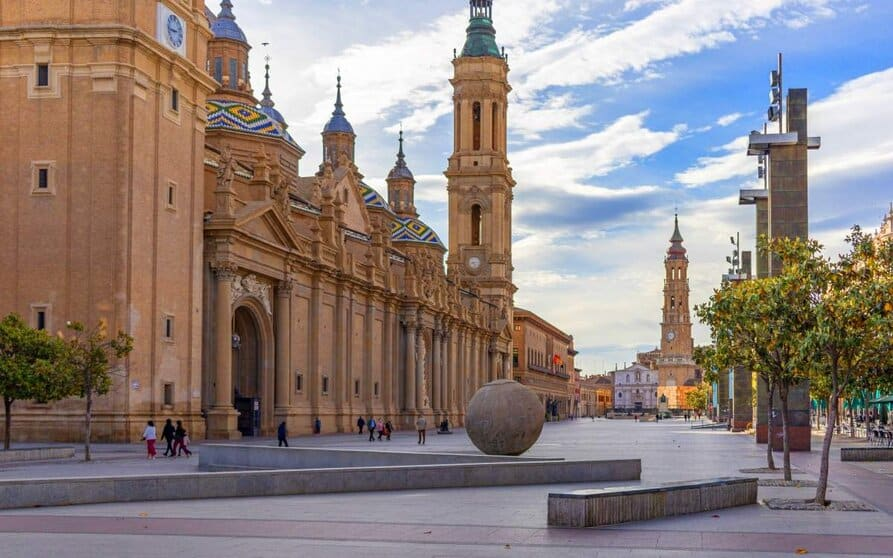
Further along, in Zaragoza, you will kneel before the Basilica of Our Lady of the Pillar — built upon the very spot where, according to tradition, the Virgin Mary appeared to the Apostle James while still alive, making it one of the oldest Marian shrines in all of Christendom.

These are not monuments to visit. They are places to encounter — where faith is written in stone, prayed in silence, and felt in the soul.

Come, and let Spain speak to your heart.

Sagrada Família, Barcelona
One of Spain’s most famous basilicas, Sagrada Família is a masterpiece of sacred architecture designed by Antoni Gaudí. Its towers, stained glass, and symbolic details invite pilgrims to reflect on the life of Christ, the Holy Family, and the beauty of faith expressed through art.
Barcelona Cathedral
Located in the Gothic Quarter, Barcelona Cathedral is a historic church dedicated to the Holy Cross and Saint Eulalia. Its Gothic architecture, peaceful cloister, and centuries of Catholic heritage make it a meaningful stop for prayer and reflection.
Montserrat Monastery
Montserrat is one of the most important pilgrimage sites in Catalonia, known for the image of Our Lady of Montserrat, also called the Black Madonna. Set among dramatic mountain scenery, it is a place of Marian devotion, prayer, and spiritual renewal.
Basilica of Our Lady of the Pillar, Zaragoza
One of Spain’s most important Marian shrines, the Basilica of Our Lady of the Pillar is traditionally connected to an apparition of the Virgin Mary to Saint James the Apostle. Pilgrims come here to pray before Our Lady of the Pillar and honor Spain’s deep Marian devotion.
La Seo Cathedral, Zaragoza
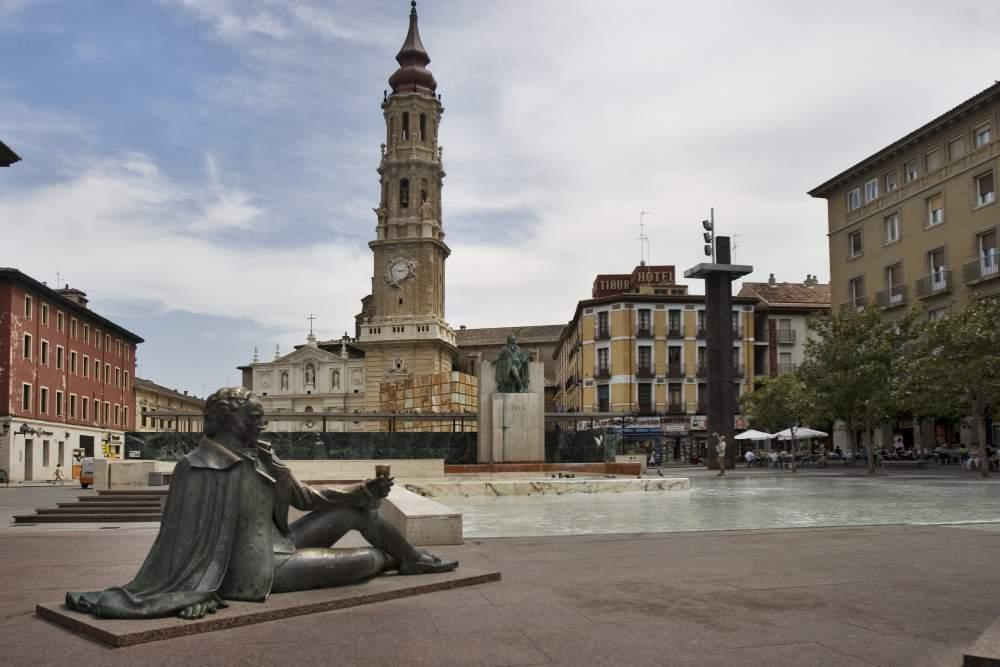
La Seo Cathedral is a historic cathedral that reflects many layers of Spanish religious and artistic history. Its architecture shows Romanesque, Gothic, Mudéjar, Renaissance, and Baroque influences, making it a powerful symbol of faith and cultural heritage.
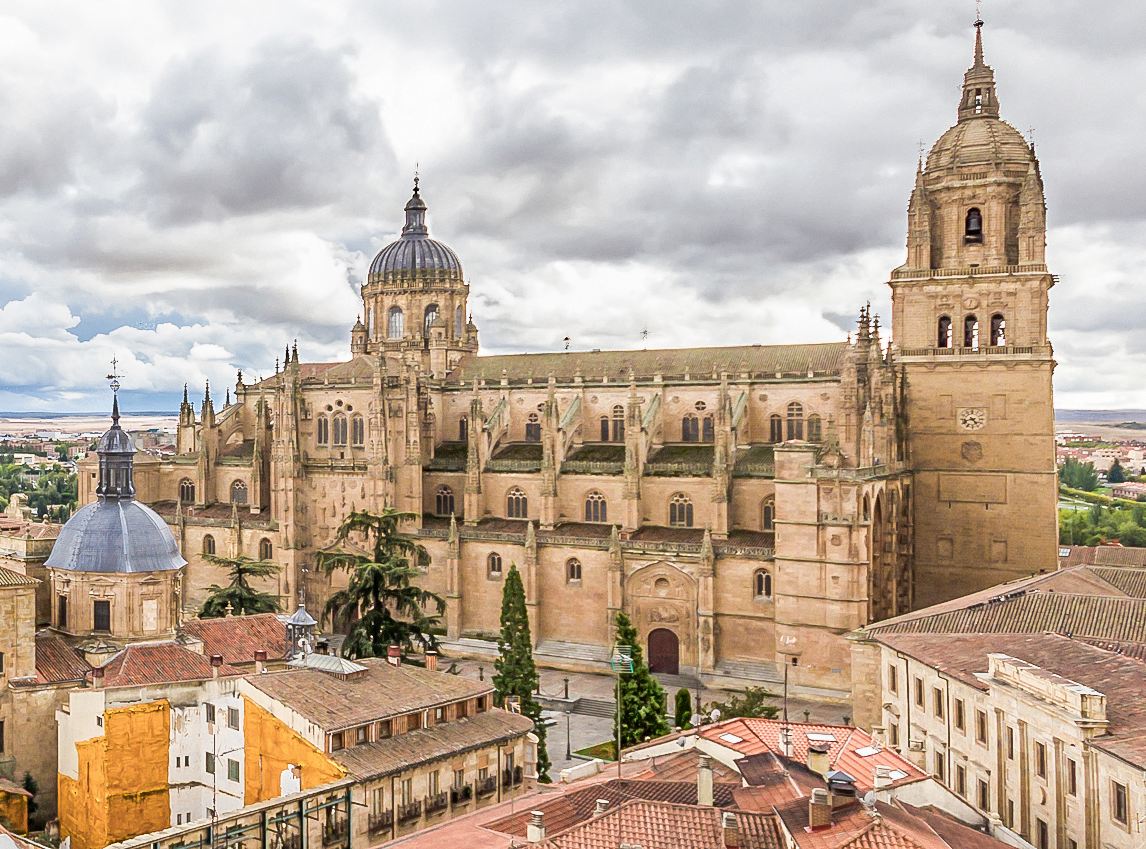
Salamanca Cathedral
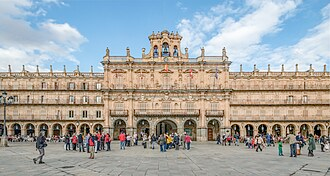
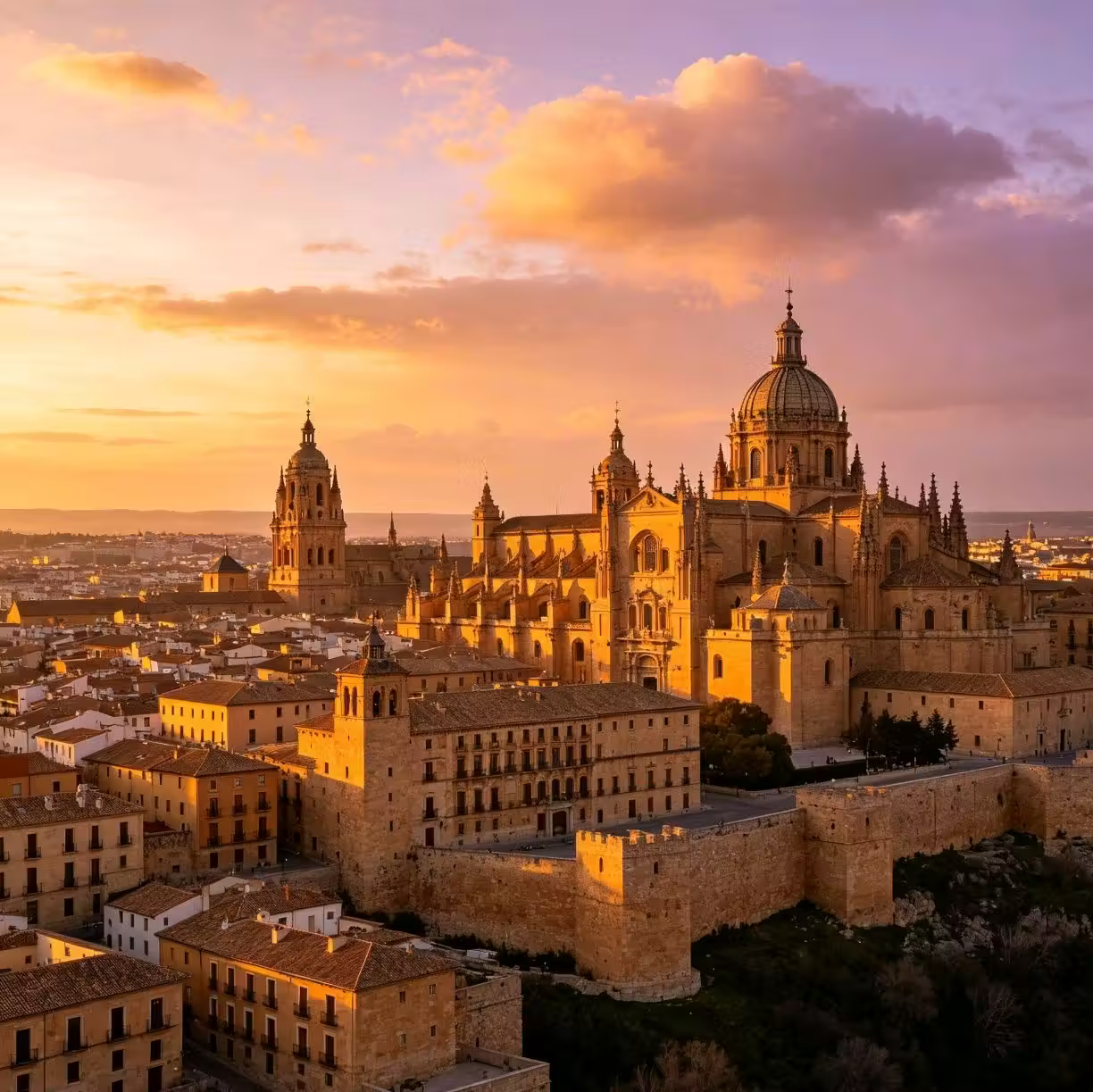
Salamanca is home to both the Old Cathedral and New Cathedral, two remarkable churches that stand side by side. These cathedrals reflect centuries of Catholic worship, learning, art, and architecture in one of Spain’s most historic university cities.
Cathedral of Santiago de Compostela
One of the most important pilgrimage destinations in the Christian world, this cathedral is traditionally believed to house the tomb of Saint James the Apostle. It is the final destination of the Camino de Santiago and a powerful place of prayer, gratitude, and renewal.
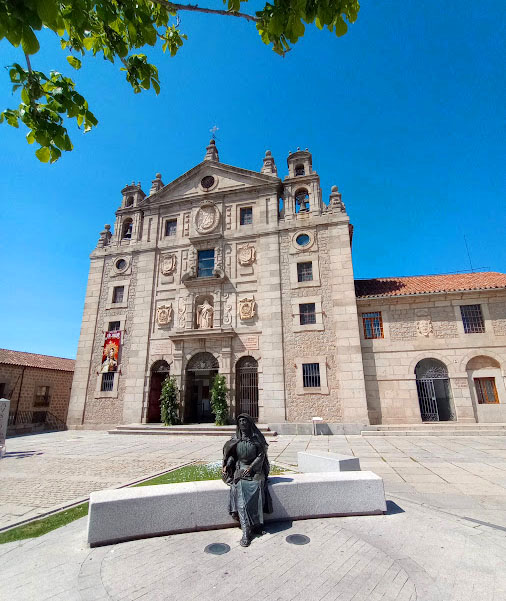
Avila / Basilica of Saint Teresa
Avila is closely connected to Saint Teresa of Jesus, one of the great saints and mystics of the Catholic Church. Pilgrims visit the city to reflect on her life, prayer, reform of Carmel, and deep spiritual teachings.