
Places & Experiences
Barcelona & the Sagrada Família: Spain’s Most Iconic Basilica
Why the Sagrada Família Is Spain’s Most Iconic Basilica
Every great city has a landmark that defines its identity. In Barcelona, that landmark is the Basílica de la Sagrada Família – a masterpiece that has become one of Spain’s most recognizable cultural and religious icons.
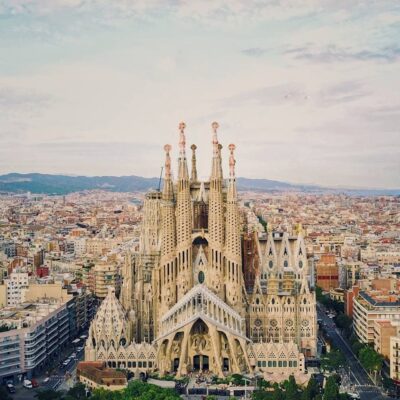
After more than 140 years of construction, the Sagrada Família has finally reached completion, bringing one of the longest architectural projects in modern history to an extraordinary conclusion. Yet its global reputation is not simply the result of the time it took to build. It is the legacy of Antoni Gaudí, whose visionary design transformed an unfinished church into one of the world’s most celebrated basilicas.
Each year, millions of visitors travel to Barcelona to admire this architectural masterpiece. They come not only to see its soaring towers or intricate façades but to experience a place where architecture, art, nature, and Christian faith exist in remarkable harmony. It is this unique combination that makes the Sagrada Família unlike any other landmark in Europe.
For Catholics, it is a Minor Basilica and an active place of worship. For architects, it represents one of the boldest and most innovative designs ever created. For Barcelona, it has become the city’s defining symbol and one of its greatest cultural treasures.
Whether you are exploring Spain for its history, architecture, or spiritual heritage, the Sagrada Família is far more than a stop on a travel itinerary. It is an unforgettable experience that continues to inspire visitors from around the world.
The 140-Year Journey That Brought Antoni Gaudí’s Dream to Life
Construction of the Sagrada Família began in 1882 under architect Francisco de Paula del Villar, whose original design followed the Neo-Gothic style popular throughout Europe at the time.
Just one year later, however, the project was entrusted to a young Catalan architect named Antoni Gaudí – a decision that would forever change its history.
Gaudí saw the Sagrada Família not as another church but as the work of his lifetime. For more than forty years, he dedicated nearly all of his energy to developing its design, continually refining every detail to reflect his artistic vision and deep religious faith.
During the final years of his life, Gaudí lived modestly and spent much of his time at the construction site. He knew he would never see the basilica completed, but that never discouraged him.
His famous words perfectly captured his unwavering faith: “My Client is not in a hurry!” The “Client” he referred to was God.
For Gaudí, the Sagrada Família was never simply an architectural project. It was an act of worship expressed through stone, light, geometry, and craftsmanship.
When he passed away in 1926, the basilica was still far from finished. Yet his vision lived on. Guided by his drawings, plaster models, and architectural philosophy, generations of architects, engineers, and artisans continued the work he had begun.
Despite setbacks caused by financial difficulties and the Spanish Civil War, construction never truly stopped. Modern engineering and digital technology later made it possible to realize many of Gaudí’s complex designs with remarkable precision.
More than a century after construction began, his extraordinary dream finally became reality, making the completion of the Sagrada Família one of the most significant achievements in modern architecture.
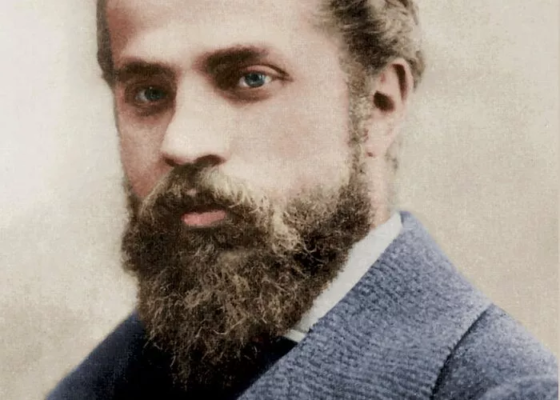
Antoni Gaudí: Inspired by the Bible and Nature
To understand the Sagrada Família is to understand the extraordinary vision of Antoni Gaudí. Unlike many architects who drew inspiration primarily from earlier buildings, Gaudí looked to two sources above all else: the Bible and the natural world.
He spent countless hours studying trees, mountains, seashells, caves, and the countless patterns found in nature. To him, creation reflected perfect design because it was the work of the Creator Himself.
Gaudí once said that he had learned from two great books throughout his life: Sacred Scripture and the Book of Nature.
That philosophy is visible throughout every corner of the basilica. The soaring columns resemble towering trees. The branching supports mirror a forest canopy. The towers rise like mountains reaching toward heaven.
Even the smallest decorative details – flowers, leaves, birds, and fruits – celebrate the beauty of creation. Nothing was designed by chance. Every element serves both an architectural purpose and a spiritual one.
Unlike many monumental churches that emphasize rigid geometry, the Sagrada Família feels alive. Its forms appear to grow naturally from the earth, creating a remarkable harmony between engineering, mathematics, faith, and nature.
For Gaudí, architecture was never about building walls. It was about creating a space where beauty could lead people closer to God.
That timeless vision continues to inspire millions of visitors each year and remains one of the reasons why the Sagrada Família is considered one of the world’s greatest architectural masterpieces.
Step Inside Gaudí’s Forest of Stone
One of the greatest surprises awaiting visitors lies not on the outside of the basilica, but within its breathtaking interior. Stepping through the doors of the Sagrada Família often feels less like entering a church and more like walking into a vast forest carved from stone.
Massive columns rise like ancient tree trunks before branching outward to support the ceiling high above. Rather than relying on traditional Gothic arches, Gaudí designed the structure to imitate the natural growth of trees, creating a space that feels open, organic, and full of life.
This was exactly the experience he intended. Gaudí believed that nature was God’s greatest masterpiece. By recreating the beauty of a forest inside the basilica, he hoped visitors would encounter the Creator through creation itself.
Unlike many Gothic cathedrals, whose dark interiors evoke solemnity and mystery, the Sagrada Família is filled with light. Sunlight streams through colorful stained-glass windows, transforming the stone columns into a vibrant display of color throughout the day.
Whether you arrive as a pilgrim, an architecture enthusiast, or a first-time traveler to Barcelona, stepping inside the Sagrada Família is more than a sightseeing experience. It is a moment of wonder, reflection, and quiet inspiration that stays with you long after your visit ends.
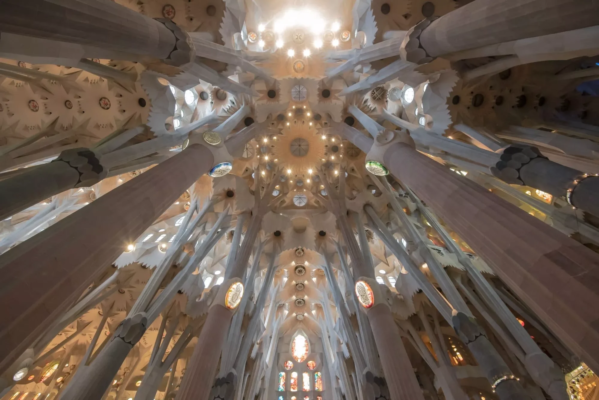
A Masterpiece of Stone, Light, and Color
Among the many architectural wonders of the Sagrada Família, its use of natural light is perhaps the most unforgettable.
For Antoni Gaudí, light was never simply a practical element – it was an essential part of the basilica’s spiritual and artistic design. He believed that light symbolized the presence of God, capable of transforming not only a space but also the experience of every visitor.
This vision comes to life through the basilica’s magnificent stained-glass windows. Instead of filling the interior with a single palette, Gaudí designed the windows so that sunlight would change the atmosphere throughout the day.
Morning light casts cool shades of blue, green, and violet across the eastern side of the basilica, creating a peaceful and contemplative setting. As the sun moves westward, warm tones of gold, orange, and crimson gradually illuminate the interior, bathing the stone columns in a radiant glow.
The changing light ensures that no two visits to the Sagrada Família are ever exactly the same. Every hour reveals a different mood, allowing visitors to experience the basilica in new and unexpected ways.
The official completion of the Sagrada Família in 2026 marks far more than the end of a remarkable construction project. It fulfills Gaudí’s extraordinary vision of bringing together faith, nature, engineering, and art in one harmonious masterpiece – an achievement that continues to inspire people from around the world.
Three Façades That Tell the Story of Christianity
One of the Sagrada Família’s most remarkable features is its three monumental façades. More than impressive entrances, they serve as a visual narration of the Christian story, guiding visitors through the life, Passion, and Resurrection of Jesus Christ. Together, they transform the basilica into both an architectural masterpiece and a powerful expression of faith.
The Nativity Façade, completed during Gaudí’s lifetime, most faithfully reflects his artistic vision. Richly decorated with biblical scenes, angels, plants, animals, and intricate natural motifs, it celebrates the birth of Christ and the mystery of the Incarnation. Every detail expresses Gaudí’s belief that all creation reflects the beauty and glory of God.
In striking contrast, the Passion Façade portrays Christ’s suffering and crucifixion through bold lines, dramatic sculptures, and minimalist forms. Its powerful imagery emphasizes sacrifice, redemption, and human vulnerability, inviting visitors to reflect on the profound meaning of Christ’s Passion.
The Glory Façade, completed as the final stage of the basilica, represents Christ’s Resurrection and the promise of eternal life. Focusing on themes of heaven, hope, judgment, and salvation, it completes Gaudí’s vision of telling the entire Christian story through architecture. Together, the three façades reveal why the Sagrada Família is not only one of the world’s greatest architectural achievements but also one of its most meaningful sacred landmarks.
Why the Sagrada Família Is One of Europe’s Most Meaningful Pilgrimage Destinations
The Sagrada Família leaves a lasting impression for reasons that go far beyond its extraordinary architecture.
Some visitors come to admire Antoni Gaudí’s genius. Others are drawn by its global reputation as one of Barcelona’s most iconic landmarks. Yet many leave remembering something less tangible – a profound sense of peace and inspiration.
Despite welcoming millions of visitors every year, the basilica retains an atmosphere of quiet reflection. As colorful light filters through the stained-glass windows and fills the soaring interior, many visitors instinctively pause, look upward, and appreciate the beauty surrounding them.
That is the true legacy of Gaudí’s vision.
He designed the Sagrada Família not simply to impress, but to inspire – to create a place where architecture encourages contemplation and beauty leads people toward something greater than themselves.
For Catholics, it remains an active place of worship and a meaningful pilgrimage destination. For travelers, it offers an unforgettable encounter with the artistic, cultural, and spiritual heritage of Barcelona.
This rare combination of faith, architecture, and history has made the Sagrada Família one of the most meaningful stops on pilgrimage journeys and cultural tours across Spain and Europe.
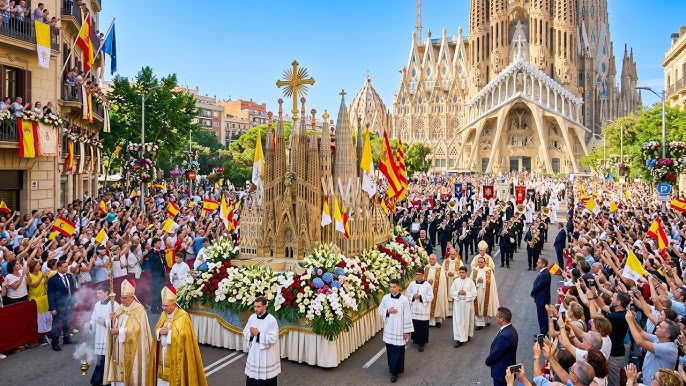
Discover Barcelona with Carnival US Travel
The Sagrada Família is more than Barcelona’s most famous landmark – it is one of the world’s greatest expressions of faith, architecture, and artistic vision.
With Carnival US Travel’s Journey of Faith, you’ll have the opportunity to experience this extraordinary basilica while exploring the rich history, culture, and spiritual heritage of Europe. More than a sightseeing vacation, our thoughtfully designed tours invite you to discover destinations that continue to inspire millions of travelers and pilgrims from around the world.
Whether you are seeking spiritual renewal, cultural discovery, or simply an unforgettable European adventure, let Carnival US Travel help you experience one of Europe’s most meaningful journeys.
Begin Your Journey of Faith Today
A visit to the Sagrada Família is more than an opportunity to admire one of the world’s greatest architectural masterpieces. It is a chance to experience the beauty of Barcelona through the lens of faith, history, and culture.
Join Carnival US Travel on a Journey of Faith and discover why the Sagrada Família continues to inspire millions of visitors more than a century after Antoni Gaudí first imagined his extraordinary vision.
Contact us today to learn more about our Spain and Europe pilgrimage tours.
📞 Call us: +1 (669) 292-7688 | +1 (669) 265-7814
🌐 Follow us on Facebook: https://www.facebook.com/carnivalinus
📍 Proudly serving travelers from San Jose, the San Francisco Bay Area, and communities across the United States.