
Places & Experiences
Bukchon Hanok Village – Discover Seoul’s Timeless Traditional Neighborhood
Bukchon Hanok Village – Where Traditional Seoul Still Feels Alive
Seoul is often introduced through its dazzling skyline, high-speed trains, and bustling shopping districts. Visitors arrive expecting futuristic architecture, vibrant nightlife, and the energy of one of Asia’s most dynamic capitals. Those expectations are certainly fulfilled, yet they tell only part of the city’s story.
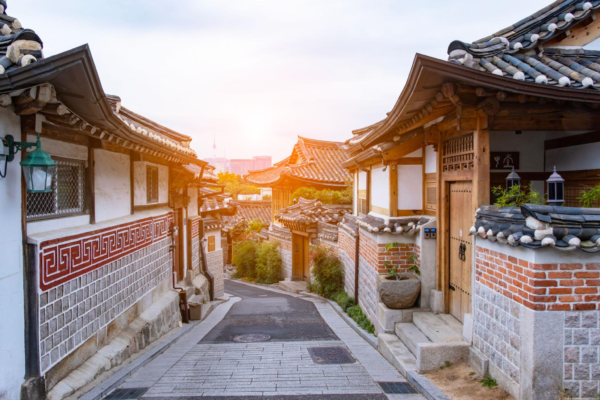
Hidden between Gyeongbokgung Palace and Changdeokgung Palace lies a neighborhood that offers an entirely different perspective on Seoul. Here, narrow stone lanes wind past wooden homes that have stood for generations. Rooflines curve gently against the skyline, and quiet courtyards replace the constant movement of city traffic. Although modern life surrounds it, Bukchon Hanok Village feels remarkably untouched by time.
Walking through Bukchon is not like visiting an outdoor museum. It is stepping into a living neighborhood where history remains woven into everyday life. Families continue to reside in many of the traditional houses, local artisans preserve centuries-old crafts, and visitors are invited to experience Korean heritage not as a distant chapter of history but as something that continues to shape the city today.
More Than Beautiful Traditional Houses
The word hanok refers to Korea’s traditional style of architecture, developed over centuries to harmonize with the country’s changing seasons and natural surroundings. Every detail reflects thoughtful design. Wooden beams provide warmth and flexibility, tiled roofs protect against rain and snow, while open courtyards encourage light and fresh air to circulate throughout the home.
Bukchon contains hundreds of these beautifully preserved houses, many dating back to the Joseon Dynasty. While their appearance alone attracts photographers from around the world, their true significance lies in what they represent.
These homes tell the story of how generations of Koreans lived, gathered, celebrated, and adapted to the changing rhythms of daily life. Unlike reconstructed heritage sites, Bukchon remains an active residential community, creating a rare balance between preservation and contemporary living. Visitors are not simply observing history – they are walking through a neighborhood where tradition continues to exist alongside the modern city.
Every Alley Reveals a Different View
One of Bukchon’s greatest charms is that it rewards curiosity rather than speed.
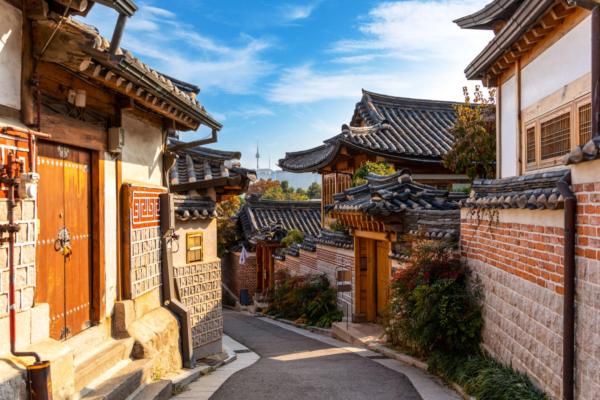
There is no single attraction that defines the neighborhood. Instead, the experience unfolds gradually with every turn. A quiet staircase leads to panoramic views of Seoul where traditional rooftops stretch toward distant glass skyscrapers. A small tea house tucked into a side street invites visitors to pause with a cup of fragrant herbal tea. Nearby workshops display handcrafted ceramics, calligraphy, textiles, and lacquerware created by artisans dedicated to preserving traditional techniques.
The changing elevation of Bukchon’s hills constantly reveals new perspectives. Some streets frame palace rooftops against the surrounding mountains, while others offer sweeping views of the city’s remarkable blend of old and new architecture. These transitions happen naturally, encouraging visitors to slow their pace and appreciate details that would easily be missed during a hurried visit.
Rather than following a checklist of landmarks, many travelers discover that their favorite memories come from simply wandering through the neighborhood without a particular destination in mind.ư
Respecting a Living Community
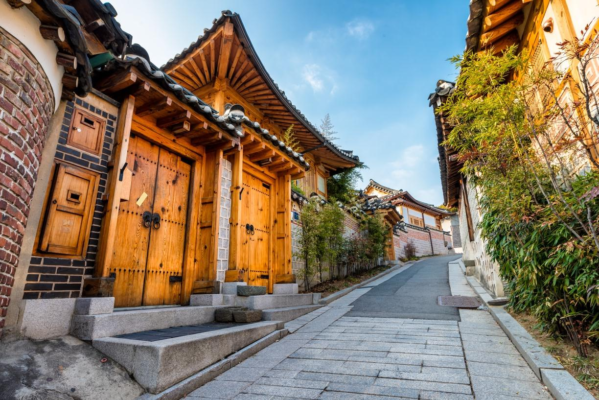
Unlike many historic districts designed exclusively for tourism, Bukchon remains home to thousands of residents. This unique characteristic adds authenticity to every visit but also carries an important responsibility.
Visitors are encouraged to explore quietly, remain on designated paths, and respect the privacy of local households. Simple gestures such as speaking softly, avoiding blocked entrances, and following posted guidance help preserve the peaceful atmosphere that makes Bukchon so distinctive.
These efforts reflect a broader philosophy of responsible travel. Cultural heritage is not preserved by architecture alone but also by the respect shown toward the people who continue to care for these places every day.
For many travelers, understanding this relationship between tourism and community becomes one of the most meaningful lessons the neighborhood offers.
Experiencing Korean Culture Beyond the Landmarks
Bukchon is often included alongside Seoul’s royal palaces, yet the neighborhood offers a more intimate understanding of Korean culture.
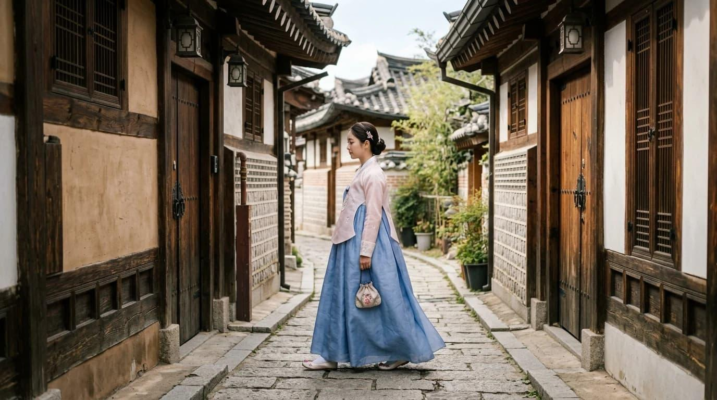
Visitors can participate in tea ceremonies, explore traditional craft workshops, rent hanbok for a walk through the historic streets, or simply sit in a quiet café overlooking tiled rooftops while watching the rhythm of local life unfold. These experiences provide insight into Korean customs that extends beyond architecture alone.
The contrast with nearby districts such as Myeongdong or Gangnam makes Bukchon especially memorable. Within a single day, travelers can move from centuries-old wooden homes to cutting-edge design districts, experiencing firsthand how Seoul balances innovation with a profound respect for its cultural heritage.
This coexistence of past and present is one of the defining qualities that continues to captivate visitors from around the world.
Discover Bukchon with Carnival US Travel
Carnival US Travel includes Bukchon Hanok Village as part of carefully designed Korea itineraries that highlight not only the country’s iconic landmarks but also the quieter places where culture can be experienced at a more personal pace. By allowing time to explore the neighborhood thoughtfully, our tours encourage travelers to discover the stories hidden behind every alley, courtyard, and traditional rooftop.
Because sometimes the most memorable way to understand a modern city is to begin where its history still lives.
Contact Carnival US Travel
📍 Serving San Jose, the Bay Area, and Vietnamese communities across the United States.
📞 669-292-7688 | 669-265-7814
🌐 https://www.facebook.com/carnivalinus