
Pilgrimage Blog/Post
What Is a Catholic Pilgrimage? Understanding the Journey Beyond the Destination
For centuries, Christians have traveled beyond their homes to places connected with their faith. They have crossed borders, followed historic routes, visited churches and shrines, prayed at sacred sites, and gathered alongside other believers in places whose significance has been preserved across generations. Although modern transportation has made international travel faster and more comfortable, the fundamental idea behind pilgrimage has remained remarkably consistent: leaving the familiar environment behind and traveling toward a place that carries a deeper spiritual meaning.
Today, a Catholic pilgrimage can take many forms. Some journeys lead travelers to major centers of Catholic tradition such as Rome, while others focus on Marian destinations such as Fatima or on places associated with saints such as Assisi. Some itineraries connect religious destinations with biblical and historical sites, allowing travelers to explore the wider cultural context in which Christianity developed. Yet regardless of the route, pilgrimage is not simply about collecting religious landmarks. The destination matters, but the intention behind the journey is what gives pilgrimage its deeper meaning.
Pilgrimage Is More Than Religious Tourism
At first glance, pilgrimage and religious tourism can appear almost identical. Both may involve visiting basilicas, cathedrals, monasteries, shrines and other places associated with Christian history. Both can include guided tours, historical explanations, cultural experiences and time spent exploring the surrounding destination. The difference, however, often lies in the way the traveler approaches the place.
A tourist may enter a basilica primarily because of its architecture, history or artistic significance, while a pilgrim may enter that same building carrying a personal intention for prayer or reflection. A visitor may travel to Assisi because of its medieval streets and beautiful Umbrian landscape, while a pilgrim may be drawn there because of the life and teachings of St. Francis. Neither experience is necessarily better than the other; they simply begin with different intentions. Pilgrimage allows the destination to become part of a personal spiritual journey rather than remaining only an object of observation.
This distinction is especially important when traveling through Europe because religious heritage is deeply woven into the continent’s history. Churches and pilgrimage sites are often also architectural masterpieces, historic landmarks and cultural treasures. Experiencing them through the lens of pilgrimage does not require travelers to ignore those other dimensions. Instead, faith, history, culture and travel can exist together within the same journey.
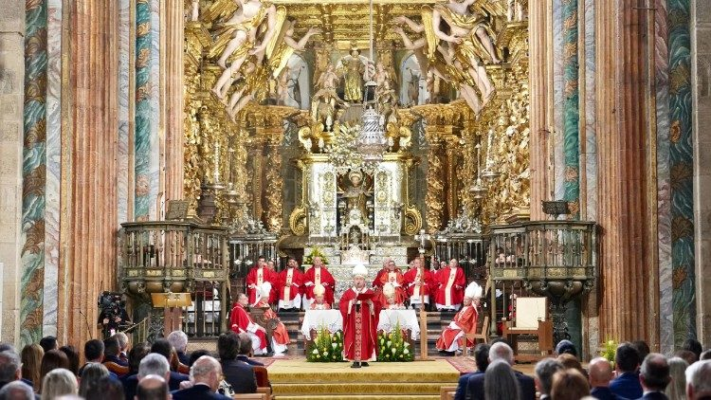
Why Do Catholics Go on Pilgrimage?
There is no single reason why someone decides to make a pilgrimage. For some people, the motivation may be deeply personal: they may want time for prayer, gratitude or reflection during an important period in their lives. Others may have a particular devotion to a saint, a Marian destination or a sacred place they have heard about for many years. Some travelers are drawn by their interest in Christian history and want to visit places connected with the early Church, the lives of saints or significant moments in Catholic tradition.
For many pilgrims, these motivations overlap. A traveler might begin a journey because they want to visit Fatima, but discover that the experience also gives them time to reflect on their family or personal life. Another traveler may initially be interested in the history of Rome and gradually develop a deeper appreciation for the religious significance of the places they visit. There is no requirement that every pilgrim arrive with one clearly defined reason. Sometimes the purpose of a pilgrimage becomes clearer only after the journey has already begun.
That is part of what makes pilgrimage different from ordinary sightseeing. The traveler is not simply asking, “What will I see?” but also, “What does this place mean to me?”
The Journey Itself Is Part of the Pilgrimage
Modern travel has made it possible to move between countries with extraordinary speed. A flight can take travelers across Europe in a matter of hours, while coaches, trains and cruise ships connect destinations that once required much longer journeys. This convenience has transformed international travel, but it can also encourage us to think of transportation as nothing more than the time between two important destinations.
Pilgrimage offers another perspective. The journey between sacred places can itself become part of the experience. Time spent traveling gives pilgrims an opportunity to pray, read, reflect, talk with fellow travelers or simply observe the landscapes changing outside the window. Instead of viewing every transfer as something to endure before reaching the next destination, travelers can treat these moments as part of the rhythm of the pilgrimage.
This is particularly meaningful on a multi-country European journey. The route may cross different landscapes, cultures and historical regions, but the movement between them creates continuity. One destination becomes connected to the next, and by the end of the journey, the traveler remembers not only individual churches and cities but also the sense of having traveled through a larger story.
Rome – Where Catholic History Becomes Tangible
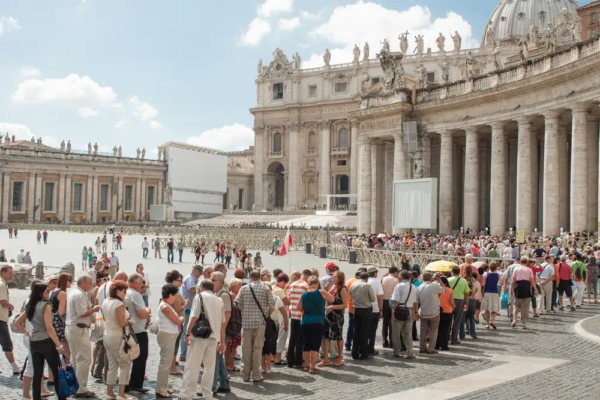
For many Catholic pilgrims, Rome represents one of the most significant destinations in Europe. Vatican City and the city’s major basilicas are closely connected with the history and traditions of the Catholic Church, while places such as St. Peter’s Basilica, St. John Lateran, St. Paul Outside the Walls and St. Mary Major provide travelers with an opportunity to encounter centuries of Christian heritage in person.
Yet Rome’s importance cannot be separated from the wider history of the city. Ancient Roman civilization, early Christianity, medieval traditions, Renaissance art and the modern Catholic Church all exist within the same landscape. A traveler can move through ruins associated with the Roman Empire and, only a short distance away, encounter churches that preserve centuries of Christian devotion. The experience becomes more powerful precisely because these layers of history exist side by side.
For a pilgrim, Rome can therefore be both a spiritual destination and an opportunity to understand the historical development of Christianity within Europe. The city does not simply tell one story. It reveals how different civilizations, traditions and communities have shaped one another over thousands of years.
Assisi – Encountering the Legacy of St. Francis
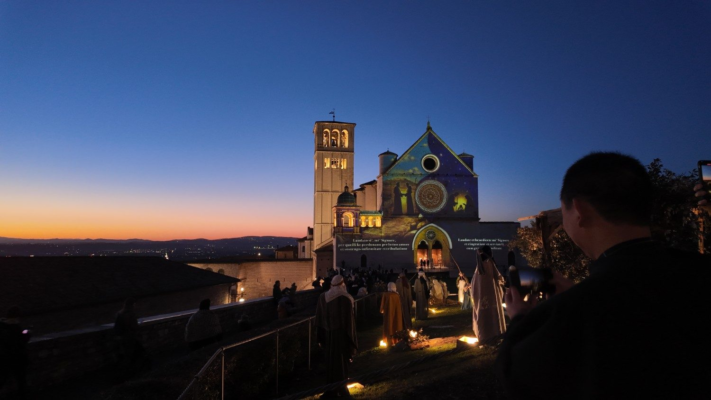
If Rome introduces travelers to the broad historical story of Catholicism, Assisi offers a more intimate experience. The Umbrian town is inseparable from the life of St. Francis of Assisi, whose emphasis on humility, simplicity, service and care for creation continues to influence Christians around the world.
Visiting Assisi allows pilgrims to encounter these ideas within the physical environment where Francis lived and worked. The medieval streets, hillside setting and surrounding countryside create a quieter rhythm than the busy streets of Rome, giving travelers more opportunities to slow down and reflect. The experience is not necessarily about seeing as many attractions as possible; it can instead be about understanding the person behind the tradition and considering why his message continues to resonate centuries later.
This is one of the strengths of pilgrimage destinations. A historical figure can feel distant when encountered only through books or religious texts, but visiting the places associated with that person’s life can provide another layer of understanding. The landscape becomes part of the story.
Fatima – A Destination Shaped by Devotion
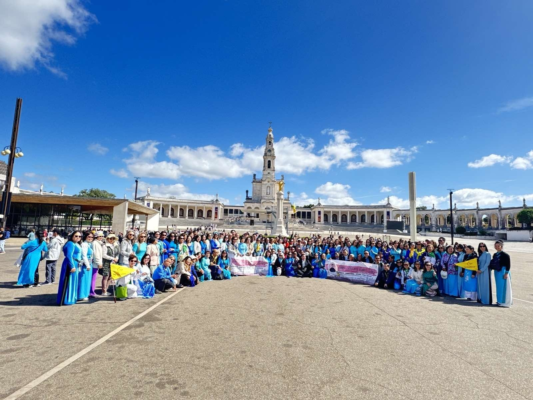
Portugal’s Fatima demonstrates another dimension of Catholic pilgrimage. The Sanctuary of Fatima is associated with the Marian apparitions reported in 1917 and has become one of the world’s most significant destinations for Catholic pilgrims. For many visitors, the experience centers on prayer, Mass, devotion and time spent within the sanctuary complex, but the significance of Fatima extends beyond any single religious activity.
People arrive with different personal intentions and different relationships with the story of Fatima. Some may have developed a devotion to Our Lady of Fatima over many years, while others may be visiting for the first time because of their family or faith community. The same physical destination can therefore mean something very different to each person who arrives there.
Fatima reminds us that pilgrimage is ultimately a personal experience even when it takes place within a large group. Thousands of people may stand in the same sanctuary, but each person brings their own hopes, questions, memories and prayers. The destination is shared; the meaning is individual.
Pilgrimage Can Connect Scripture With Real Places
European pilgrimage can also provide an opportunity to connect religious texts with physical geography. Stories that may have been encountered through Scripture, religious education or family traditions can feel very different when travelers stand in locations associated with those stories.
Greece offers an especially interesting example. Athens and Corinth are significant destinations because of their extraordinary ancient history, but they also have connections with the journeys and ministry of St. Paul and the development of early Christian communities. Visiting these places allows travelers to consider Christianity not only as a religious tradition but also as a historical movement that developed within the complex political and cultural world of the ancient Mediterranean.
This intersection between archaeology, history and faith is one of the most compelling aspects of European pilgrimage. Travelers are not simply looking at ruins or reading historical information; they are placing familiar stories within the landscapes where the people and communities connected with those stories actually lived.
Pilgrimage Is Also About Community
Although pilgrimage can be deeply personal, it does not have to be a solitary experience. Traveling as part of a pilgrimage group creates a temporary community of people who share the same route and many of the same experiences. Participants may come from different generations and backgrounds, but spending days together naturally creates opportunities for conversation, friendship and shared reflection.
The community aspect can become particularly meaningful during longer journeys. A conversation over breakfast, a shared meal after a long day of sightseeing or a discussion about a place visited earlier can transform a group of strangers into familiar companions. Some of the relationships formed during a pilgrimage may continue long after everyone has returned home.
This sense of community is part of what makes pilgrimage different from simply visiting a sacred site independently. The journey becomes something that is experienced with others, even though every traveler may carry a different personal reason for being there.
You Do Not Need to Be an Expert to Go on Pilgrimage
Some people may hesitate to join a Catholic pilgrimage because they feel they do not know enough about Catholic history, saints or religious traditions. In reality, a pilgrimage is not a test of knowledge. You do not need to memorize dates, understand every theological concept or recognize every historical figure before you leave home.
Curiosity is enough.
A well-organized pilgrimage provides opportunities to learn along the way. Guides can explain the history of important sites, local communities can provide cultural context, and fellow travelers may share their own experiences and perspectives. Even the physical environment can teach you something that is difficult to understand through a book alone.
In many cases, arriving with questions can make the journey more rewarding than arriving with every answer already prepared. A pilgrimage gives travelers the chance to encounter familiar stories from a different perspective and perhaps discover aspects of their faith or history that they had never considered before.
A Pilgrimage Can Be Spiritual and Cultural at the Same Time
There is sometimes an assumption that a pilgrimage must focus exclusively on religious activities. European pilgrimage, however, naturally brings travelers into contact with art, architecture, food, music, local traditions and everyday life. Christian heritage is deeply intertwined with European culture, meaning that a visit to a sacred site often reveals much more about the society that built and preserved it.
A basilica can be a place of worship while also being an extraordinary architectural achievement. A medieval town can be associated with a saint while also revealing the traditions and lifestyle of a particular region. A local meal shared after visiting a shrine may not be explicitly religious, but it can become part of the memory of the pilgrimage.
These experiences do not dilute the spiritual character of the journey. Instead, they provide context. They help travelers understand that faith has always existed within real communities, cities, cultures and landscapes.
A Pilgrimage Creates Space to Reflect
Modern life often leaves very little uninterrupted time for reflection. Work, responsibilities, communication and everyday routines can make it difficult to step away from familiar habits long enough to consider what really matters.
Travel does not automatically solve that problem, but changing your environment can create an opportunity to slow down. A quiet morning in a church, a period of prayer at a shrine, a long journey between destinations or even a few minutes looking across an unfamiliar landscape can provide space to think.
For some travelers, that reflection may be explicitly religious. For others, it may involve family, relationships, gratitude, personal goals or questions about the future. A pilgrimage does not require every moment to feel profound. Sometimes its value lies simply in creating the time and distance necessary to notice thoughts that everyday life tends to push aside.
The Meaning of a Pilgrimage Can Change Along the Way
Perhaps the most interesting aspect of pilgrimage is that the reason you begin the journey may not be the reason you remember it afterward. Someone may begin because they have always wanted to visit Rome and return home with a deeper appreciation for Catholic history. Another person may travel to Fatima because of a family tradition and discover that the journey gives them an opportunity to reflect on their own life. Someone else may join because a friend invited them and unexpectedly find a sense of community among the other travelers.
These changes are not signs that the journey has gone away from its original purpose. They are part of the experience. Travel creates encounters that cannot be completely predicted, and pilgrimage gives those encounters a framework within which they can become meaningful.
The most valuable part of a pilgrimage may therefore be something that was never written in the itinerary.
What Makes a Pilgrimage Different From an Ordinary European Tour?
Many pilgrimage destinations are also popular tourist destinations, so the difference is not necessarily found in the locations themselves. Rome, Assisi, Fatima, Athens and other European destinations welcome travelers for many different reasons, and two people can stand in exactly the same place while having completely different experiences.
The difference lies in the perspective brought to the journey. A tourist may enter a basilica primarily to admire its architecture, while a pilgrim may enter with a personal prayer. A traveler may visit Assisi because of its beautiful medieval streets, while a pilgrim may be thinking about the life of St. Francis. A visitor may see Corinth primarily as an archaeological site, while a pilgrim may also reflect on its connection with the early Christian community associated with St. Paul.
The destination can be the same. The journey does not have to be.
Choosing a Pilgrimage That Is Right for You
Not every pilgrimage itinerary will appeal to every traveler, and choosing the right journey is about more than looking at the number of destinations included. Consider what kind of experience you are seeking and which places have particular meaning for you. Some journeys emphasize Marian devotion, while others focus on the lives of saints, biblical history, major Catholic centers or a combination of religious and cultural experiences.
The pace of the itinerary is equally important. A journey that includes many destinations may provide greater variety, but it can also involve more transportation and walking. Travelers should therefore consider how much time they want to spend exploring, how much time they would like for reflection, and what type of group experience feels comfortable.
For those traveling internationally, an organized pilgrimage can also reduce much of the logistical complexity. Transportation, accommodation, group coordination and scheduled visits can be incorporated into the itinerary, allowing travelers to focus more fully on the destinations and the experience itself.
Carnival US Travel’s European pilgrimage journeys include itineraries built around significant Catholic destinations and experiences, giving travelers opportunities to explore Europe’s religious heritage alongside its history and culture.
The Destination Is Only the Beginning
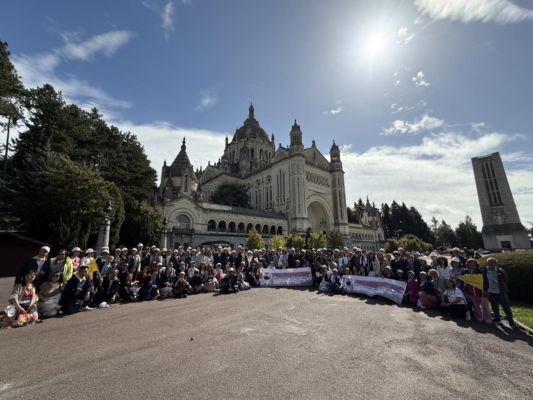
A Catholic pilgrimage begins long before you arrive at a church, basilica, shrine or historic city. It begins with the decision to leave home and travel toward somewhere that carries meaning for you. From there, every part of the journey – the landscapes between destinations, conversations with fellow travelers, moments of prayer, historical discoveries and quiet periods of reflection – can become part of the experience.
And when you return home, the pilgrimage does not necessarily end in the way an ordinary vacation does. A place you visited may remain in your thoughts. A story you heard may change how you understand a familiar part of your faith. A friendship formed during the journey may continue for years. A quiet moment that seemed insignificant at the time may become one of the memories you return to most often.
Perhaps that is why pilgrimage has remained meaningful for so many generations.
It is not simply about traveling to a sacred destination. It is about allowing the journey to change the way you experience that destination – and perhaps the way you see your own life.
Begin Your Own Journey of Faith
Whether you are drawn to the great Catholic centers of Europe, the places associated with saints, Marian destinations or the biblical history of the early Church, a pilgrimage offers a different way to experience Europe. You do not have to know exactly what you will discover before you leave. Sometimes the most meaningful journeys are those that give you enough structure to begin, while leaving enough room for something unexpected to become part of your story.