
Places & Experiences
Athens – Where Ancient Greece Meets the Mediterranean
There are few cities where the past feels quite as present as it does in Athens.
From almost every corner of the Greek capital, reminders of an extraordinary ancient civilization appear alongside the energy of modern city life. The Acropolis rises above a landscape of contemporary buildings, narrow streets lead into historic neighborhoods, and traditional tavernas sit comfortably alongside modern cafés and restaurants. Athens is simultaneously ancient and modern, monumental and intimate, historical and unmistakably alive.
For travelers, this combination is part of what makes Athens so compelling. A visit can begin with some of the world’s most recognizable archaeological landmarks and continue through lively neighborhoods, local cuisine, museums, and Mediterranean streetscapes. For Catholic travelers and pilgrims, however, Athens offers another layer of meaning. The city is also connected with the missionary journey of St. Paul, bringing together the history of ancient Greece and the story of early Christianity in a particularly fascinating way.
A First Encounter with Ancient Athens
The Acropolis is naturally one of the first places most visitors want to experience.
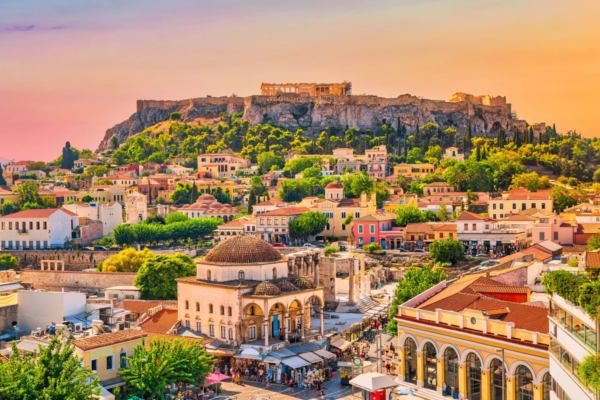
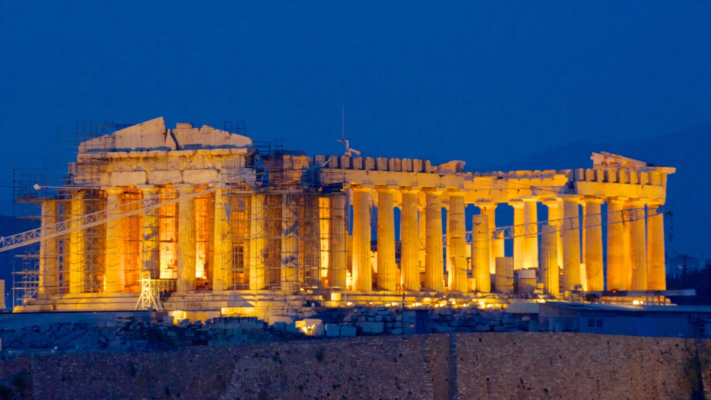
Standing above Athens, this ancient citadel is home to several remarkable monuments, most famously the Parthenon, which has become one of the defining symbols of classical Greece. Its architecture reflects the extraordinary achievements of ancient Athenian civilization, while its position above the city provides a striking reminder of how deeply the ancient and modern worlds are intertwined.
Yet the experience of visiting the Acropolis is about more than simply seeing a famous monument in person. Walking through the archaeological site allows travelers to appreciate the scale and complexity of the civilization that once flourished here. The temples, pathways, and surviving structures provide context for understanding Athens not merely as a destination, but as one of the most influential centers of the ancient Mediterranean world.
From the Acropolis, the city unfolds in every direction. Modern Athens stretches far beyond the ancient hill, creating a visual connection between thousands of years of history and contemporary Greek life.
Discovering Athens Beyond the Acropolis
Although the Acropolis may be the city’s most recognizable landmark, Athens becomes even more interesting when travelers move beyond its most famous archaeological site.
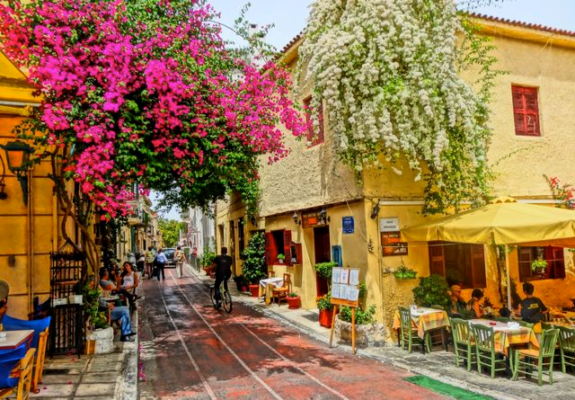
The historic neighborhood of Plaka, located beneath the Acropolis, offers a completely different atmosphere. Its narrow streets, neoclassical buildings, small shops, cafés, and traditional restaurants provide an opportunity to experience Athens at street level. Rather than looking at history from behind museum glass, visitors can encounter a living neighborhood that has developed around the city’s ancient heritage.
Nearby, the Monastiraki area adds another dimension to the experience. Its busy streets, markets, restaurants, and views toward the Acropolis make it one of the liveliest parts of central Athens. For travelers who enjoy discovering a destination through everyday life, these neighborhoods can be just as memorable as the major monuments.
Food is another essential part of experiencing the city. Greek cuisine reflects the Mediterranean character of the country through ingredients such as olive oil, vegetables, herbs, seafood, cheeses, and grilled meats. Sitting down for a meal in Athens is therefore not simply a break between sightseeing stops; it is another way of experiencing Greek culture.
Athens and the Story of St. Paul
For pilgrims, Athens becomes particularly meaningful because of its place in the history of early Christianity.
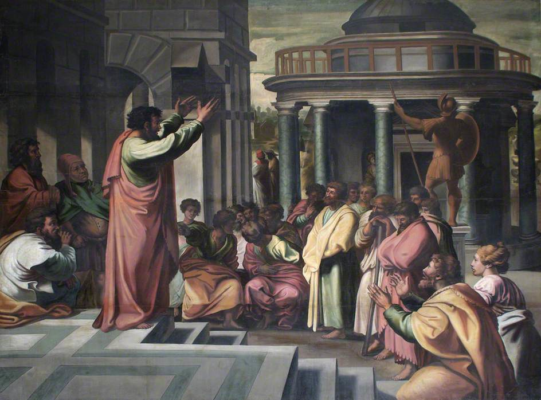
St. Paul visited Athens during his missionary journeys, entering a city that was already famous for its philosophical traditions and intellectual culture. His encounter with the Athenians, traditionally associated with the Areopagus, is recorded in the Acts of the Apostles and represents one of the most fascinating moments in the early spread of Christianity.
What makes this connection significant for modern travelers is the contrast between the worlds represented by Athens.
On one side is the intellectual heritage of ancient Greek philosophy, which shaped Western thought for centuries. On the other is the emerging Christian movement, which was beginning to spread across the Mediterranean.
Standing in Athens today, travelers can therefore encounter a destination where these two histories intersect.
This is one of the reasons a pilgrimage through Greece can feel very different from a conventional sightseeing tour. The destination is not simply something to photograph. Its geography becomes part of the story, giving travelers an opportunity to connect places they have previously encountered through Scripture or history with the physical landscapes where those events unfolded.
From Athens to the Aegean
Athens also works beautifully as an introduction to the wider Aegean experience.
Once travelers leave the capital, Greece opens into a landscape of islands, coastal communities, archaeological sites, and centuries-old religious traditions. The contrast between mainland Athens and the Greek Islands creates a natural progression: from the monumental history of classical Greece to the slower rhythm of Mediterranean island life.
A cruise can make this transition particularly seamless. Rather than constantly packing and unpacking between destinations, travelers can use the ship as their base while moving through the Aegean.
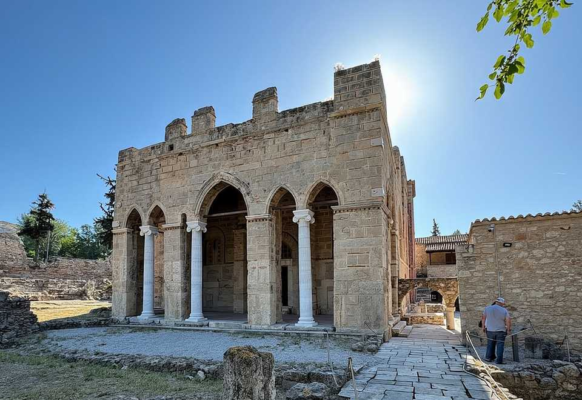
For example, Carnival US Travel’s Follow in the Footsteps of Saint Paul journey combines Rome and Athens with an Aegean cruise visiting destinations including Mykonos, Patmos, Ephesus, and Santorini, before continuing to Ancient Corinth. The itinerary is designed to bring together Christian heritage, ancient history, Greek island culture, and the experience of traveling through the Mediterranean. Explore Follow in the Footsteps of Saint Paul
The result is a journey in which Athens is not an isolated stop. It becomes one chapter in a much larger story.
Why Athens Belongs on a Mediterranean Journey
What makes Athens memorable is ultimately the number of different experiences contained within one city.
You can spend the morning exploring the Acropolis and thinking about the achievements of ancient civilization, then wander through Plaka in the afternoon, enjoy a traditional Greek meal, and finish the day watching the city come alive after sunset. For pilgrims, the experience can go even deeper by considering the city’s connection with St. Paul and the early Christian world.
That combination makes Athens particularly well suited to travelers who want more from a European journey than a checklist of famous landmarks.
It is a destination where history can be seen, culture can be experienced, and faith can be explored through the places that shaped it.
And perhaps that is the best way to approach Athens: not as a city belonging only to the past, but as a place where thousands of years of history continue to influence the way people live, worship, eat, gather, and travel today.
Experience Athens With Carnival US Travel
For travelers looking to explore Greece through a combination of cultural discovery and Christian heritage, Athens can be an especially meaningful starting point.
Carnival US Travel’s pilgrimage and Mediterranean cruise experiences bring together destinations associated with ancient Greece, the early Christian Church, and the beauty of the Aegean. With carefully planned itineraries and opportunities to explore multiple destinations in one journey, travelers can experience Greece not simply as a vacation destination, but as part of a much larger Mediterranean story.
Athens is waiting to be explored – not only for what remains from the ancient world, but for the stories that continue to connect the city with travelers today.
Ready to discover Greece through a journey that brings history, faith, culture, and the Mediterranean together? Explore Carnival US Travel’s upcoming journeys and find the itinerary that speaks to you.