
Pilgrimage Blog/Post
When the Journey Becomes the Destination – Experiencing Greece by Sea
There is a particular feeling that comes with traveling through Greece by sea.
One morning, you may find yourself walking through the remains of an ancient civilization. By afternoon, the landscape has changed completely: whitewashed buildings appear along a hillside, fishing boats move slowly across the harbor, and the deep blue of the Aegean stretches toward the horizon. The next day brings another island, another story, another landscape.
This is one of the reasons a journey through the Greek Islands feels different from a conventional trip to Greece. The destinations are important, but so is the space between them.
Traveling by sea allows Greece to reveal itself gradually. Instead of treating each island as an isolated destination, travelers begin to experience the Aegean as a living geographical connection between ancient cities, island communities, archaeological sites, religious heritage, and modern Mediterranean life.
For travelers joining a Mediterranean or pilgrimage journey, this can transform the cruise itself into an essential part of the experience.
Greece Looks Different From the Water
From the mainland, Greece is often experienced through its cities, archaeological sites, mountains, and villages. From the sea, the perspective changes.
The coastline becomes the first introduction to a destination. Islands appear on the horizon before their towns come into view, and the landscape slowly changes as the ship approaches the harbor. What might be a simple transfer between destinations on a conventional itinerary becomes part of the travel experience.
This is particularly noticeable in the Aegean, where hundreds of islands and islets create an extraordinary maritime landscape. Each island has its own character, history, architecture, and relationship with the sea.
Traveling between them provides something that land-based travel cannot easily reproduce: the feeling of watching Greece unfold one horizon at a time.
The sea becomes the thread connecting the journey.

From Ancient Cities to Island Life
One of the most appealing aspects of an Aegean journey is the contrast between the destinations.
A traveler may spend one day exploring the historical remains of Corinth, thinking about the ancient world and the early Christian communities that once lived there. Later, the journey can move toward an island such as Mykonos, where the experience becomes centered on whitewashed streets, waterfront cafés, traditional architecture, and contemporary Greek island culture.
These experiences may seem completely different, but that contrast is exactly what makes the journey interesting.
Greece is not one single travel experience. It is a country where ancient history and modern life exist alongside each other, and where archaeological sites can be followed by lively towns, quiet villages, beaches, mountains, and islands.
Traveling by sea makes those contrasts particularly easy to experience within one journey.
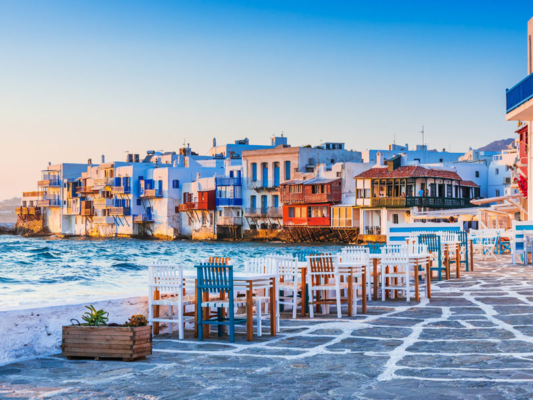
A Morning in Mykonos
Arriving in Mykonos introduces travelers to one of the most recognizable landscapes in the Greek Islands.
The island’s traditional white buildings, narrow lanes, blue accents, windmills, and waterfront create an instantly recognizable visual identity. Yet Mykonos is more than a collection of picturesque photographs.
Walking through the town allows travelers to experience the island at street level. Small shops, cafés, churches, local restaurants, and waterfront views create an atmosphere that is very different from the archaeological sites of mainland Greece.
The experience also demonstrates why time in port matters. A destination does not have to be packed with activities to become memorable. Sometimes, simply walking through the streets, enjoying a local meal, or finding a quiet place overlooking the sea can provide a stronger memory than trying to see every possible attraction.
A cruise allows travelers to experience this kind of island visit without turning the entire journey into a complicated sequence of hotel changes and transfers.
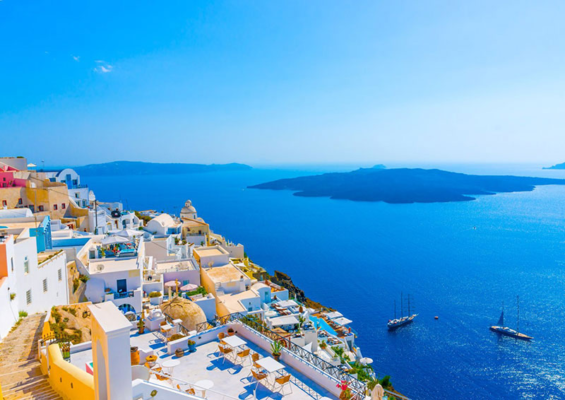
Patmo – A Different Kind of Island Experience
If Mykonos introduces the cultural and visual appeal of the Greek Islands, Patmos offers a more reflective side of the Aegean.
Known for its connection with St. John and the Book of Revelation, Patmos has long attracted Christian pilgrims and travelers interested in religious heritage. Its Cave of the Apocalypse and Monastery of St. John the Theologian are among the island’s most important sites.
Yet the experience of Patmos extends beyond its religious landmarks.
The island’s landscape, traditional architecture, and peaceful atmosphere create a sense of distance from the larger tourist centers of the Mediterranean. Walking through Chora or looking across the surrounding Aegean landscape can make the island feel remarkably calm.
For travelers on a pilgrimage itinerary, this slower atmosphere can be particularly meaningful. After visiting major cities and archaeological sites, Patmos offers a chance to pause.
It is a reminder that travel does not always need to be about seeing more. Sometimes, it is about allowing yourself enough time to absorb what you have already seen.

The Aegean as Part of the Story
When traveling through Greece by sea, the Aegean is not simply a backdrop.
For thousands of years, this sea has connected civilizations, communities, trading centers, and islands. Ancient Greeks navigated its waters, merchants crossed between ports, and religious communities developed along its shores.
Many of the destinations travelers visit today were shaped by this maritime geography.
That is why seeing Greece from a ship can add another layer to the experience. Instead of viewing the islands as separate dots on a map, travelers begin to understand the sea as the reason those places became connected in the first place.
The same waters that now carry modern cruise ships once carried ancient merchants, travelers, soldiers, pilgrims, and missionaries.
The technology has changed.
The journey across the sea remains.
Why a Cruise Works So Well for Island-Hopping
Exploring multiple Greek Islands independently can be incredibly rewarding, but it also requires considerable planning. Travelers need to coordinate ferries or flights, accommodation, luggage transfers, transportation, and schedules between different destinations.
A cruise changes that rhythm.
The ship becomes a temporary home while the destinations change around it. Travelers can explore a port during the day and return to the same familiar surroundings afterward. There is no need to check into a new hotel every evening or repeatedly move luggage from one destination to another.
This can be particularly valuable on an itinerary that combines historical exploration with multiple islands.
Instead of spending energy managing logistics, travelers can focus more on the destinations themselves.
And there is another advantage that is easy to overlook: the journey between ports becomes time to rest.
After a day exploring an archaeological site or walking through a historic town, returning to the ship creates a natural transition between experiences. The landscape continues moving outside the window while travelers have time to relax, enjoy a meal, or simply watch the sea.
The Beauty of Having More Than One Kind of Day
A great Mediterranean itinerary does not need every day to feel the same.
One day might be filled with ancient ruins and historical storytelling. Another might involve walking through an island town. A third could be spent exploring a religious site. Later, there may be time simply to enjoy the sea.
This variety is particularly valuable for longer journeys because it prevents travel fatigue.
When every day is built around intensive sightseeing, even extraordinary destinations can begin to feel overwhelming. A cruise through Greece naturally creates a different rhythm, alternating between active exploration and time on board.
The result can be a more balanced journey.
You are not constantly rushing toward the next attraction.
You are moving through the destination at a pace that allows different experiences to coexist.
What Makes the Aegean So Memorable
Perhaps the greatest attraction of an Aegean journey is not any single landmark.
It is the combination of experiences.
It is the sight of an island appearing across the water early in the morning. It is the sound of a harbor becoming busier as the day begins. It is a quiet church tucked into a village street, an ancient stone column standing under the Mediterranean sun, or a meal enjoyed overlooking the sea.
It is also the contrast between what feels ancient and what feels completely contemporary.
A traveler can walk through a place whose history stretches back thousands of years and then return to a modern café with Wi-Fi and a menu designed for today’s visitors.
That coexistence is part of what makes Greece fascinating.
The past has not disappeared.
It simply exists alongside the present.
More Than a Cruise, More Than a Vacation
For some travelers, a Greek Islands cruise may begin as a convenient way to see several destinations.
But somewhere along the journey, that practical decision can become something more.
The sea creates continuity between the places. The destinations begin to form a narrative. Ancient Corinth connects with Athens; the mainland leads toward the islands; Patmos introduces another chapter of Christian heritage; and the landscapes of Mykonos and Santorini provide a completely different expression of Greece.
When these experiences are combined, the cruise becomes more than transportation.
The journey itself becomes part of the destination.
Carnival US Travel’s Mediterranean and pilgrimage journeys incorporate Greek destinations into broader itineraries, allowing travelers to combine historical exploration with the experience of traveling across the Aegean by sea. Explore Carnival US Travel Journeys
This approach is particularly appealing for travelers who want more from Greece than a single city or island. Instead of choosing between history, culture, faith, scenery, and relaxation, they can experience several dimensions of the country within one journey.
Let Greece Unfold Slowly
There is no single correct way to experience Greece.
Some travelers may prefer to stay in one island for a week. Others may want to explore Athens in depth. Some will be drawn primarily to ancient history, while others will remember the beaches, food, villages, and sunsets.
But for those who want to experience several sides of Greece within one journey, traveling by sea offers something special.
It allows the destination to unfold gradually.
You wake up somewhere new. You step ashore. You explore. You return to the ship. Then, as the sun begins to disappear over the Aegean, the coastline slowly fades behind you.
Tomorrow, there will be another island.
Another story.
Another horizon.
And that is perhaps the most beautiful thing about traveling through Greece by sea: you never quite know what will appear beyond the next horizon.
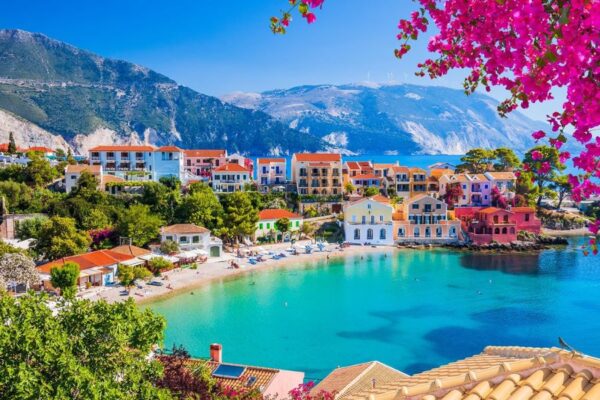
Experience Greece Beyond the Destination
A journey through the Greek Islands is about much more than checking famous places off a travel list. It is about experiencing the sea that connects them, the cultures that shaped them, and the different rhythms of life found across the Aegean.
With Carnival US Travel, travelers can discover Greece through carefully designed journeys that combine cultural exploration, historic destinations, pilgrimage experiences, and the freedom of traveling by sea.
Discover Greece from a different perspective – and let the Aegean become part of your story.