
Places & Experiences
Kyoto in Autumn: Why It’s the Best Time to Discover Japan’s Ancient Capital
Some Cities Are Beautiful All Year Round. Others Are Defined by a Single Season.
Kyoto is one of those rare places.
For more than a thousand years, Kyoto served as the imperial capital of Japan, shaping the nation’s culture, art, religion, and traditions. Although Tokyo has long since become Japan’s modern capital – with its soaring skyscrapers, dazzling lights, and fast-paced lifestyle – Kyoto continues to hold a unique place in the hearts of the Japanese people.
It is a city where centuries-old temples stand beside tranquil gardens, traditional tea houses line quiet stone-paved streets, and timeless customs remain part of everyday life.
Yet many travelers who visit Kyoto for the first time in autumn share the same impression: It feels as though the city was made for this season.
As temperatures begin to cool, Kyoto transforms into a breathtaking landscape of crimson, amber, and golden foliage. Zen gardens, historic shrines, ancient temples, and peaceful canals are framed by brilliant maple leaves, creating scenes that seem almost too beautiful to be real.
Every corner of the city becomes a picture waiting to be captured.
Every quiet street tells another story.
Every temple offers a different perspective on autumn’s beauty.
Perhaps that is why many Japanese believe that if you only have one opportunity to visit Kyoto in your lifetime, autumn is the season you should choose.
Why Is Kyoto So Famous for Autumn?
Japan offers countless destinations for enjoying autumn foliage. From the northern island of Hokkaido to the southern regions of Kyushu, vibrant autumn colors gradually sweep across the country each year. Yet despite this abundance of beautiful landscapes, Kyoto remains one of Japan’s most celebrated autumn destinations.
The first reason is its extraordinary concentration of cultural heritage. Home to more than 2,000 temples and shrines, Kyoto preserves one of the richest collections of historic architecture anywhere in the world. Many of these sacred sites have stood for centuries, providing spectacular settings where brilliant maple leaves blend effortlessly with traditional wooden temples, vermilion torii gates, elegant pagodas, and meticulously designed Japanese gardens.
This combination of nature and history creates scenery unlike anywhere else in Japan.
Another reason lies in Kyoto’s pleasant autumn climate. From late October through November, temperatures generally range between 50°F and 68°F (10–20°C), offering cool, comfortable weather ideal for exploring the city on foot. Unlike Japan’s humid summer months, autumn typically brings crisp air, blue skies, and relatively little rainfall, making it one of the most enjoyable seasons for sightseeing.
The comfortable weather encourages visitors to slow down, wander through Kyoto’s historic neighborhoods, and spend hours exploring temples, gardens, and traditional streets without feeling rushed.
Autumn in Kyoto is not simply about beautiful scenery. It is about experiencing the city at its most peaceful and authentic.
Momiji: The Soul of Japanese Autumn
If cherry blossoms symbolize spring, Momiji represents the very spirit of autumn in Japan.
The word Momiji refers primarily to maple leaves that gradually turn brilliant shades of red, orange, and gold as temperatures begin to fall. For the Japanese, these colorful leaves are much more than a seasonal phenomenon – they are part of a centuries-old cultural tradition that celebrates the beauty of nature and the changing seasons.
This tradition is known as Momijigari, which literally means “autumn leaf viewing” or “maple leaf hunting.”
Despite its dramatic name, Momijigari has nothing to do with hunting. Instead, it is the practice of traveling to beautiful locations to admire autumn foliage, spend time outdoors with family and friends, and appreciate the fleeting beauty of nature.
Much like Hanami, the cherished spring tradition of viewing cherry blossoms, Momijigari encourages people to slow down and fully embrace the present moment.
In Kyoto, this tradition reaches its most spectacular expression. Temple pathways become tunnels of crimson leaves. Historic gardens glow beneath golden canopies.
Traditional tea houses overlook peaceful courtyards covered in vibrant maple foliage. Even ordinary streets seem transformed by the rich colors of autumn.
For many visitors, Kyoto offers the quintessential Momijigari experience – one that beautifully reflects the Japanese appreciation for nature, harmony, and the passing of time.
Kyoto’s Most Beautiful Places to See Autumn Leaves
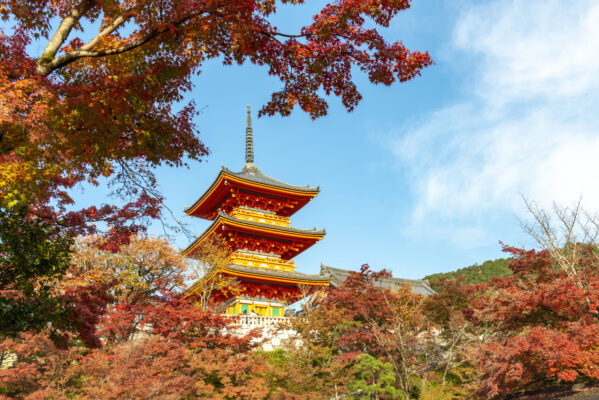
Kiyomizu-dera: Autumn Beauty from Above
Among Kyoto’s many UNESCO-listed landmarks, Kiyomizu-dera Temple remains one of the city’s most iconic destinations during autumn.
Its famous wooden stage extends dramatically over a hillside blanketed with thousands of maple trees. When the leaves reach their peak colors, visitors are rewarded with sweeping panoramic views of vibrant red and golden forests stretching across the valley below.
The contrast between the historic temple and the brilliant autumn foliage creates one of Kyoto’s most photographed landscapes.
Tofuku-ji: Kyoto’s Paradise of Maple Leaves
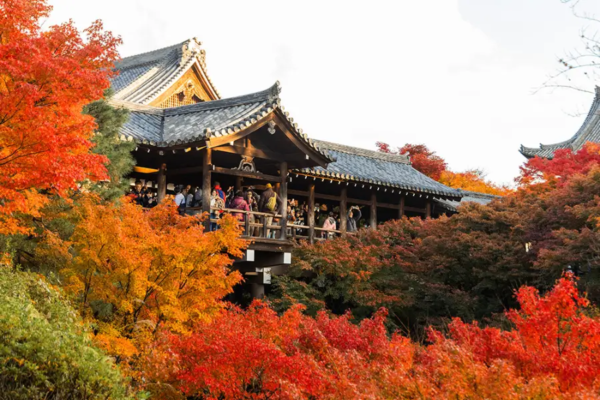
For many Japanese travelers, Tofuku-ji Temple represents the very essence of Kyoto’s autumn season.
The temple is renowned for Tsutenkyo Bridge, which spans a valley filled with hundreds of maple trees. During peak foliage, the view resembles a vast ocean of crimson, amber, and gold extending as far as the eye can see.
It is one of the few places where visitors truly understand why Kyoto has become synonymous with autumn in Japan.
Arashiyama: Where Nature Meets History
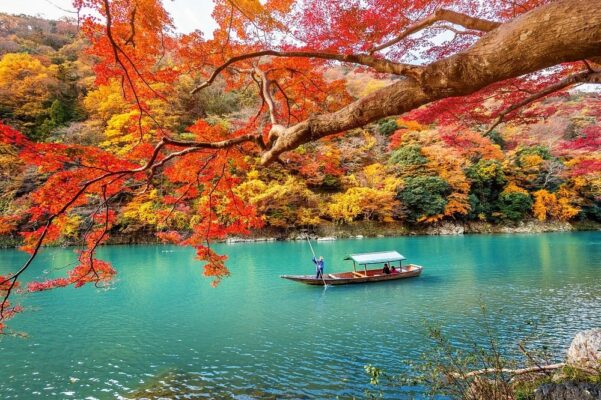
Few places capture Kyoto’s timeless beauty quite like Arashiyama.
While internationally famous for its enchanting Bamboo Grove, the district becomes even more spectacular during autumn as the surrounding mountains burst into brilliant shades of red, orange, and yellow.
Crossing the iconic Togetsukyo Bridge, visitors enjoy breathtaking views of the Katsura River framed by colorful mountainsides, creating one of Kyoto’s most recognizable seasonal landscapes.
Arashiyama perfectly combines history, nature, and traditional Japanese culture, making it an essential stop for anyone visiting Kyoto in the fall.
Kyoto Is More Than Just Autumn Leaves
What makes Kyoto truly extraordinary is not simply the beauty of its fall foliage. Rather, it is the city’s remarkable ability to blend nature, history, and culture into one unforgettable experience.
A typical day in Kyoto begins quietly. You might start your morning wandering through the preserved streets of Gion, where traditional wooden machiya houses, tea shops, and centuries-old architecture preserve the atmosphere of old Japan.
By lunchtime, it’s easy to discover a cozy local restaurant serving seasonal specialties prepared with ingredients harvested at the peak of autumn.
Later in the afternoon, visitors often find themselves exploring peaceful Zen gardens, ancient temples, or strolling beneath maple trees whose brilliant colors seem to grow even richer as the sunlight softens.
This rhythm of life feels entirely different from Tokyo.
While Japan’s capital impresses visitors with innovation, technology, and constant movement, Kyoto offers something more contemplative – a chance to slow down, appreciate tradition, and experience a side of Japan that has remained remarkably unchanged for centuries.
For many travelers, Kyoto becomes more than a destination. It becomes a place where they feel genuinely connected to Japan’s cultural soul.
Autumn Is Also a Season of Extraordinary Japanese Cuisine
For the Japanese, autumn is celebrated not only for its breathtaking scenery but also for its seasonal flavors.
As temperatures cool, restaurants throughout Kyoto begin serving dishes that highlight the finest ingredients of the harvest season.
Among the most prized is Matsutake mushroom, renowned for its rich aroma and delicate flavor. Seasonal chestnuts, sweet potatoes, persimmons, and freshly harvested vegetables also appear on menus across the city.
Many visitors choose to experience Kaiseki, Kyoto’s traditional multi-course dining style that emphasizes seasonal ingredients, artistic presentation, and culinary craftsmanship.
Every course reflects the changing season, allowing diners to appreciate autumn through both taste and visual beauty.
Few experiences capture the spirit of Kyoto more perfectly than enjoying an elegant meal in a traditional restaurant while overlooking a tranquil Japanese garden covered in vibrant maple leaves.
It is not simply dining.
It is another expression of Japan’s deep appreciation for nature and the passing of the seasons.
Why Kyoto Continues to Rank Among the World’s Best Autumn Destinations
Every year, millions of international travelers visit Kyoto during the autumn foliage season.
Although this is one of the busiest times of the year, the city’s popularity never seems to diminish.
The reason goes far beyond photography.
Kyoto offers something increasingly rare in today’s fast-moving world—a destination where centuries-old traditions continue to shape everyday life.
Walking beneath crimson maple trees beside ancient temples, hearing the gentle sound of temple bells, or quietly sipping matcha in a traditional tea house creates experiences that cannot be replicated elsewhere.
Autumn simply reveals Kyoto at its most beautiful.
The changing colors do not transform the city into something new.
Instead, they reveal what has always been there – its harmony between architecture, nature, spirituality, and culture.
Perhaps that is why Kyoto consistently appears on lists of the world’s most beautiful autumn destinations.
Visitors leave not only with stunning photographs but also with a deeper appreciation of Japanese aesthetics and the philosophy of finding beauty in every changing season.
Discover the Timeless Beauty of Kyoto in Autumn
There are many reasons to visit Japan.
Some travelers come for its fascinating culture.
Others are drawn by its world-renowned cuisine or vibrant modern cities.
Many simply dream of witnessing the country’s famous seasonal landscapes.
Yet if you wish to experience Japan at its most elegant, peaceful, and culturally authentic, Kyoto in autumn remains one of the finest choices you can make.
Beyond the brilliant maple leaves, Kyoto offers an opportunity to discover traditions that have shaped Japan for more than a thousand years.
From magnificent temples and tranquil gardens to seasonal cuisine and timeless neighborhoods, every part of the city reflects an appreciation for beauty that continues to inspire visitors from around the world.
It is a destination where every season tells a story – but autumn tells perhaps the most unforgettable one of all.