
Places & Experiences
Mount Fuji in Autumn – Japan’s Most Iconic Landscape at Its Finest
Mount Fuji in Autumn – When Japan’s Most Famous Mountain Reveals Its Quietest Beauty
There are few landmarks in the world as instantly recognizable as Mount Fuji. Rising gracefully above the surrounding countryside, its perfectly balanced silhouette has inspired artists, poets, and pilgrims for centuries. It appears in woodblock prints, travel photography, and countless postcards, becoming a symbol not only of Japan but also of the country’s deep relationship with nature.
Yet for all its fame, Mount Fuji remains surprisingly elusive.
Many first-time visitors arrive in Japan only to discover that the mountain is hidden behind clouds. During the humid months of summer, even travelers staying nearby may wait hours without catching a clear view. This unpredictability has become part of Fuji’s character, making every unobstructed glimpse feel like a gift rather than an expectation.
Autumn changes that experience completely.
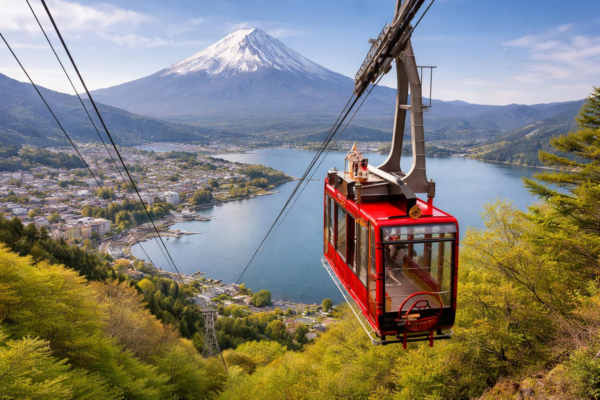
As cooler air replaces summer humidity, visibility improves dramatically across the Fuji region. Clear blue skies become more frequent, the surrounding forests transform into brilliant shades of crimson and gold, and the mountain seems to emerge with renewed clarity. It is during these weeks that Mount Fuji reveals the landscape most people imagine long before they arrive in Japan – a landscape where natural beauty, changing seasons, and quiet reflection come together in perfect balance.
Why Autumn Is the Best Time to See Mount Fuji
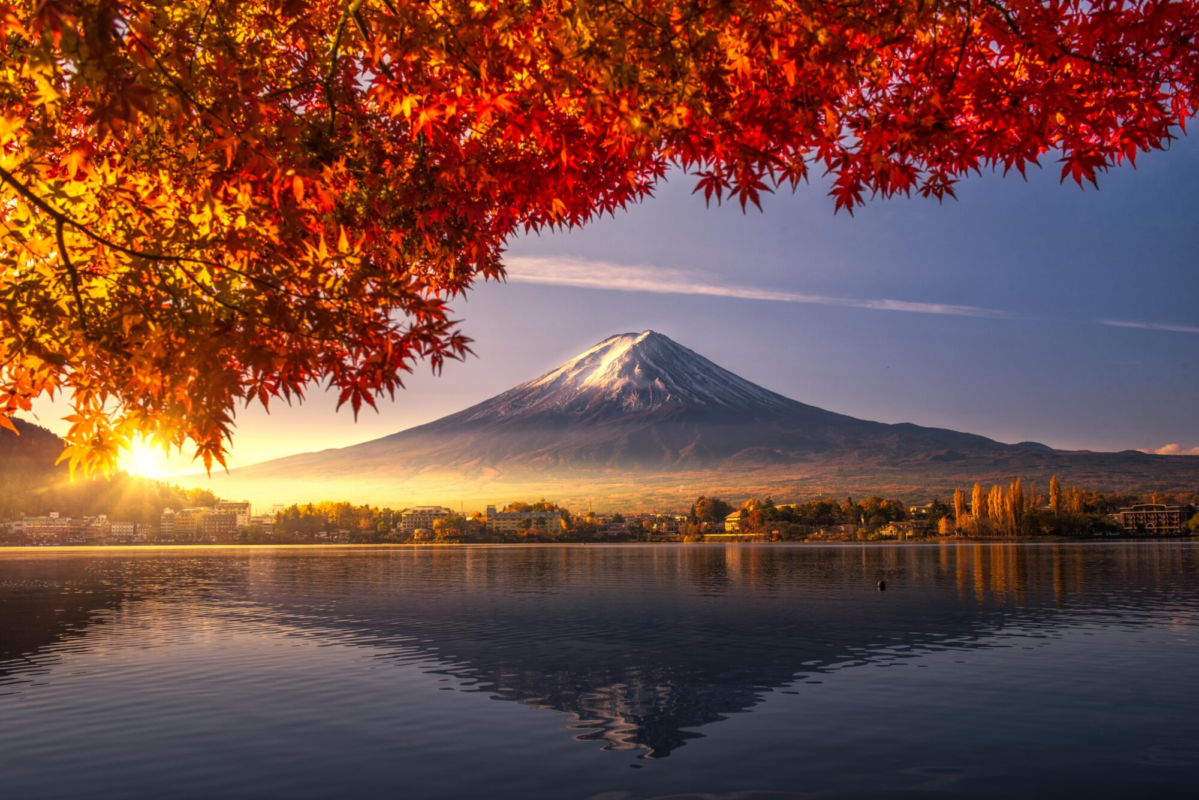
Every season offers a different perspective on Mount Fuji. Spring brings cherry blossoms, winter covers the summit with fresh snow, and summer attracts climbers determined to reach the peak. Autumn, however, offers something unique: the combination of exceptional visibility and extraordinary color.
From late October through November, cooler temperatures reduce atmospheric haze, creating some of the clearest views of the mountain throughout the year. Photographers often describe autumn as the ideal season because the crisp air reveals details that remain hidden during warmer months. Even travelers with no interest in photography immediately notice the difference. Fuji appears closer, sharper, and more imposing against deep blue skies.
The landscape surrounding the mountain undergoes its own transformation. Maple trees blaze with scarlet leaves, ginkgo avenues turn golden, and forests stretching across the foothills create a vibrant frame around Japan’s highest peak. Rather than competing with the mountain, these seasonal colors draw attention to its quiet elegance, making the entire region feel more harmonious than spectacular.
This harmony is one reason autumn has become a favorite season among repeat visitors. They are not simply returning to see Mount Fuji again. They are returning to experience it under entirely different conditions.
Lake Kawaguchiko Offers the View Most Travelers Dream About
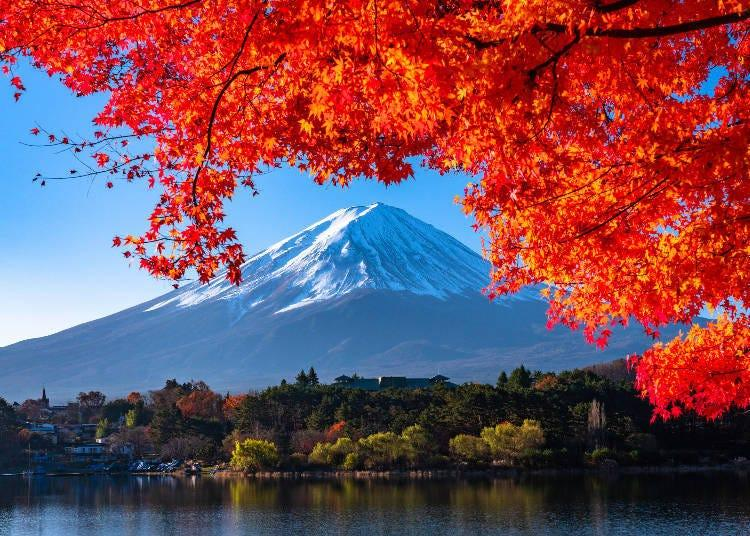
Among the Fuji Five Lakes, Lake Kawaguchiko has become the destination most closely associated with autumn photography – and for good reason.
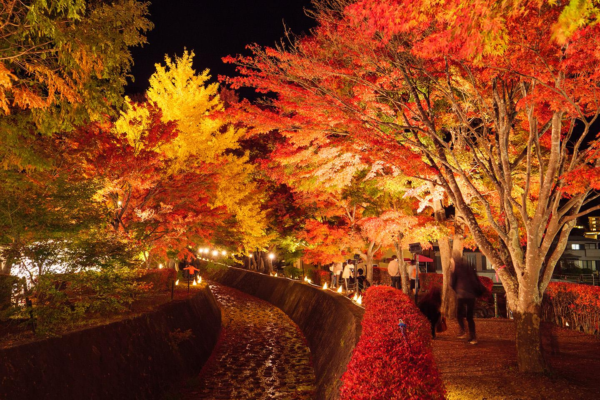
On calm mornings, the surface of the lake reflects the mountain with remarkable clarity, creating symmetrical scenes that have become iconic in travel magazines around the world. During peak foliage season, crimson maple trees line the shoreline, adding layers of color without overwhelming the simplicity of the landscape.
Despite its popularity, Kawaguchiko never feels defined by a single viewpoint. Walking along the lakeside reveals constantly changing perspectives. A small bridge frames Fuji differently from every angle. Traditional inns overlook quiet coves where mist rises shortly after sunrise. Cafés with large windows encourage visitors to linger over coffee while watching clouds drift slowly across the summit.
The annual autumn foliage festival adds another dimension to the season. Local food stalls, evening illuminations, and community celebrations create a warm atmosphere that complements the natural beauty without overshadowing it. Rather than feeling like a commercial event, it reflects the Japanese appreciation for celebrating each season as it arrives.
A Landscape Best Experienced Slowly
Many travelers include Mount Fuji as a day trip from Tokyo, arriving in the morning and returning by evening. While this approach allows visitors to see the mountain, it often misses the subtle changes that make the region so memorable.
Morning begins with soft light spreading across the lakes, while cooler temperatures create ideal conditions for walking. By afternoon, the surrounding forests glow beneath autumn sunshine, revealing colors that shift constantly as the light changes. Evening introduces another atmosphere entirely, when the mountain gradually fades into silhouette and village lights begin reflecting across the water.
Spending more time in the region also opens opportunities to experience traditional ryokan accommodations, local cuisine, and nearby hot springs. Relaxing in an outdoor onsen while looking toward Mount Fuji is one of those experiences that cannot be fully captured by photographs. It is quiet, unhurried, and deeply connected to the rhythm of the landscape itself.
These slower moments remind visitors that Mount Fuji is not simply something to look at. It is a place to experience.
More Than Japan’s Highest Mountain
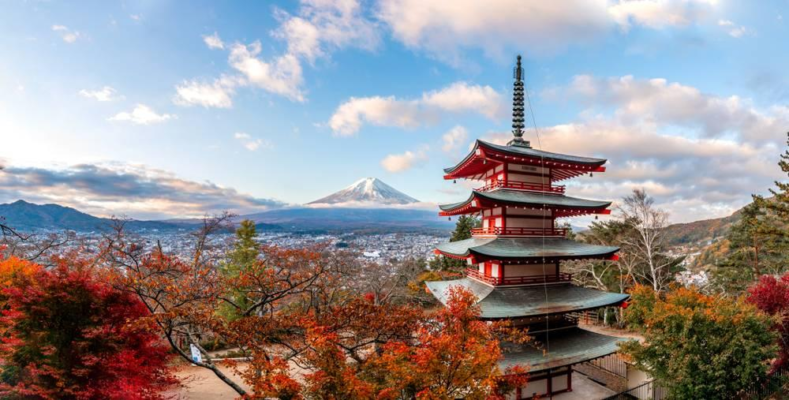
Mount Fuji occupies a unique place in Japanese culture because it represents far more than geography. For centuries, it has been regarded as a sacred mountain, inspiring religious pilgrimages, artistic expression, and philosophical reflection.
Its near-perfect symmetry suggests balance. Its changing appearance reflects the passing seasons. Its presence on the horizon offers a reassuring sense of permanence within a world that is constantly changing.
Perhaps this is why so many people feel unexpectedly emotional when they see Fuji for the first time. The mountain itself does not move, yet it invites people to pause. Conversations become quieter. Cameras are lowered for a moment. Visitors simply stand and watch, recognizing that some landscapes deserve more than a quick photograph.
Long after returning home, many travelers find that Mount Fuji remains one of the clearest memories of their journey – not because it was the tallest mountain they had ever seen, but because it expressed something uniquely Japanese: beauty that reveals itself most fully when approached with patience.
Experience Mount Fuji in Autumn with Carnival US Travel
Carnival US Travel includes the Mount Fuji region as an essential part of our autumn journeys through Japan, allowing travelers to experience not only the famous viewpoints but also the quieter moments that make this landscape unforgettable. From scenic lakeside walks and seasonal festivals to carefully selected accommodations and cultural experiences, our itineraries are designed to help guests appreciate Fuji beyond the postcard image.
Because the most memorable view of Mount Fuji is often the one that appears when there is nowhere else you need to be.
Contact Carnival US Travel
📍 Serving San Jose, the Bay Area, and Vietnamese communities across the United States.
📞 669-292-7688 | 669-265-7814
🌐 https://www.facebook.com/carnivalinus