
Pilgrimage Blog/Post
Following the Footsteps of St. Paul Across the Aegean Sea – A Pilgrimage Cruise Unlike Any Other
Some journeys are measured by the places they visit. Others are remembered for the way they transform the heart.
As dawn breaks over the Aegean Sea, the horizon slowly comes alive with shades of gold and blue. From the deck of the ship, the silhouette of a Greek island gradually emerges, its whitewashed houses cascading down rocky hillsides while church bells echo softly across the harbor. It is a peaceful moment, one that feels far removed from the rush of everyday life.
For many travelers, this is simply another beautiful Mediterranean morning. For pilgrims, however, it is something far more meaningful. Each sunrise marks the beginning of a new chapter in a journey that follows the footsteps of the Apostles, connecting some of the most significant places in early Christian history.
Unlike traditional pilgrimage tours that often involve long hours on the road and frequent hotel changes, a pilgrimage cruise offers a remarkably different rhythm. The ship becomes your home throughout the journey, allowing you to unpack once while every new day reveals another destination rich in biblical heritage. Instead of spending hours in transit, you find yourself enjoying the quiet beauty of the sea, reflecting on the experiences of the previous day, and preparing your heart for the next sacred place awaiting on the horizon.
Perhaps this is why pilgrimage cruises have become increasingly popular among Christian travelers around the world. They combine the spiritual depth of a faith journey with the comfort of modern cruising, creating an experience that is both meaningful and deeply restorative.
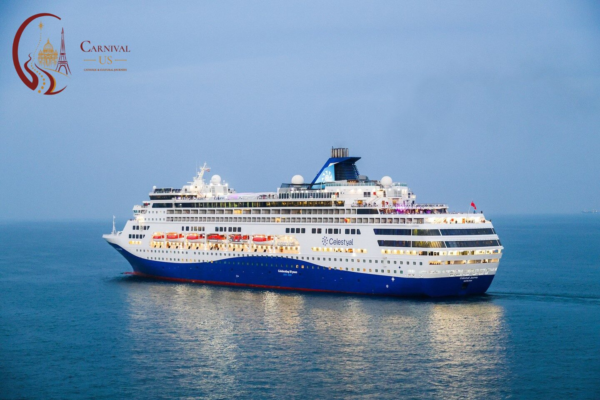
Where Faith, History, and the Mediterranean Meet
The Aegean Sea has long been a crossroads of civilizations. Ancient philosophers once debated in its cities, merchants sailed its waters, and empires rose and fell along its shores. Yet for Christians, this region holds an even deeper significance.
Nearly two thousand years ago, St. Paul traveled throughout Greece and Asia Minor, proclaiming the Gospel in places that would become foundational to the growth of Christianity. Cities such as Athens, Corinth, and Ephesus were not merely stops along his missionary routes; they became living communities of faith whose stories continue to inspire believers today.
To visit these places is to encounter the New Testament beyond its pages.
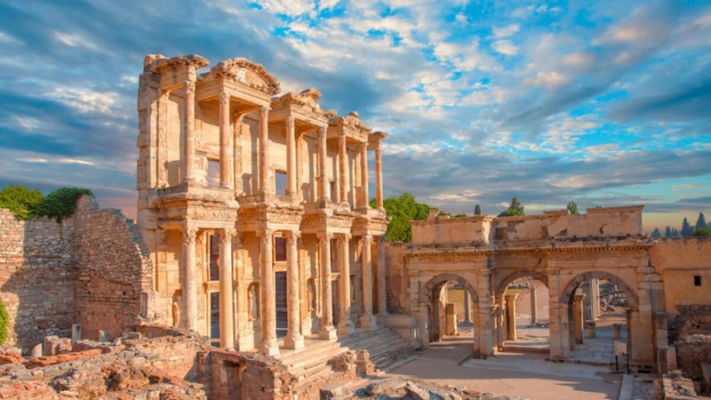
Standing on Mars Hill in Athens, where St. Paul addressed the philosophers of his time, brings the Acts of the Apostles into vivid reality. Walking through the ancient streets of Corinth offers a deeper understanding of the letters that continue to be proclaimed during Mass around the world. Visiting Ephesus reveals the setting where one of the earliest Christian communities flourished, while nearby stands one of the most cherished Marian pilgrimage sites in the world.
Unlike many historical destinations where the past feels distant, these places retain a remarkable spiritual presence. Pilgrims do not simply observe ruins or admire archaeological treasures; they encounter locations where faith was lived, challenged, and courageously proclaimed.
That experience transforms the journey from sightseeing into something much more personal.
A Different Way to Experience Pilgrimage
One of the greatest advantages of traveling by cruise is the pace it offers.
Traditional tours often require travelers to pack their luggage almost every morning before continuing to the next destination. Long coach rides become part of the daily routine, leaving less time to truly absorb each place.
A pilgrimage cruise changes that completely.
Your cabin remains the same throughout the voyage, while the scenery outside your window changes every day. One morning you awaken to the historic skyline of Athens. The next, you find yourself approaching the peaceful island of Patmos. Soon afterward, the volcanic cliffs of Santorini rise dramatically from the sea before Mykonos welcomes visitors with its iconic whitewashed streets and windmills.
Rather than feeling hurried from one destination to another, every transition becomes part of the experience itself.
Evenings bring a different kind of tranquility. After a full day of visiting sacred sites, travelers return to the ship, enjoy dinner overlooking the Mediterranean, stroll beneath the stars on the open deck, or simply watch the coastline disappear into the distance as the vessel quietly sails toward its next destination.
These quiet moments between ports often become some of the most treasured memories of the entire pilgrimage.
They offer something increasingly rare in modern life: time to slow down.
Time to pray.
Time to reflect.
Time to simply be present.
A Journey Designed for Both the Soul and the Senses
Pilgrimage has never been only about reaching a destination.
Throughout Christian history, the journey itself has always carried profound meaning. Every step invites reflection, every encounter deepens understanding, and every sacred place offers an opportunity to renew one’s relationship with God.
Traveling through the Aegean by cruise embraces that tradition in a uniquely contemporary way.
The experience allows pilgrims to balance moments of spiritual reflection with the simple joys of discovering new cultures. One day may be spent exploring ancient biblical sites, while the next offers time to wander through charming Greek villages, enjoy local Mediterranean cuisine, or admire spectacular coastal landscapes that have inspired travelers for centuries.
Rather than separating faith from travel, the journey reveals how naturally they complement one another.
It becomes possible to appreciate the beauty of God’s creation while also encountering the history of the early Church, creating memories that nourish both the mind and the spirit.
For many travelers, this balance is what makes a pilgrimage cruise unlike any other travel experience.
Walking Through the Lands of the New Testament
For many Christians, names such as Athens, Corinth, Patmos, and Ephesus have been familiar since childhood. They appear throughout the Acts of the Apostles, in the Epistles of St. Paul, and in the stories that continue to be proclaimed during Sunday Mass. Yet reading about these places and standing within them are two entirely different experiences.
A pilgrimage across Greece offers something that books alone cannot provide. Ancient streets, weathered stone pathways, Roman marketplaces, and archaeological remains suddenly give physical form to passages of Scripture that may have once felt distant. The New Testament is no longer confined to printed pages; it unfolds within landscapes that continue to bear witness to the earliest centuries of Christianity.
This transformation is often one of the most profound moments of the journey. Travelers begin to realize that Christianity did not emerge in abstract ideas but through real people, real cities, and real communities. Every destination tells part of that remarkable story.
Athens – Where the Gospel Entered the Intellectual Heart of the Ancient World
Few cities have shaped human civilization as profoundly as Athens. Often celebrated as the birthplace of democracy, philosophy, and classical learning, the city has long been associated with names such as Socrates, Plato, and Aristotle. Yet for Christians, Athens represents something equally significant.
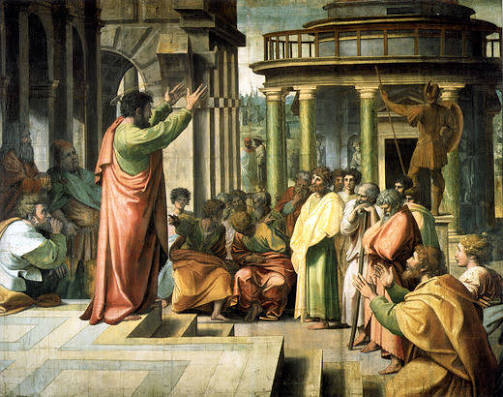
It was here that St. Paul stood on Mars Hill (Areopagus) and addressed the philosophers of his day, proclaiming the message of the Risen Christ to an audience deeply rooted in Greek thought. Rather than rejecting their culture, Paul began with what they already knew, pointing to the altar dedicated “To an Unknown God” before revealing the God whom they had unknowingly sought.
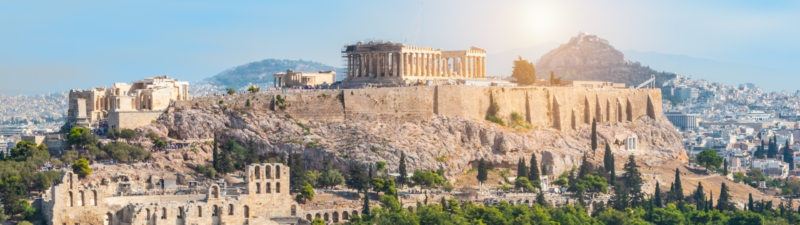
Today, standing upon the rocky hill of Areopagus, pilgrims enjoy sweeping views of the Acropolis rising above the city skyline. The Parthenon dominates the landscape much as it did nearly two thousand years ago, offering a striking reminder of the world into which Christianity first entered.
It is difficult not to imagine the courage required for Paul to preach in such a setting. Surrounded by temples dedicated to ancient gods and speaking before some of the most educated minds of the Roman world, he introduced a message unlike anything his listeners had heard before. Whether welcomed or challenged, that proclamation became one of the defining moments in the spread of Christianity across Europe.
For many pilgrims, Athens becomes far more than an archaeological destination. It is a place where faith encountered reason, where dialogue replaced fear, and where the Gospel first reached the intellectual heart of the ancient Mediterranean.
Corinth – A Living Testament to the Early Church
If Athens represents the beginning of Paul’s mission in Greece, Corinth reveals what happened afterward.
During the first century, Corinth was one of the busiest commercial centers of the Roman Empire. Merchants, sailors, philosophers, and travelers from every corner of the Mediterranean passed through its ports, creating a vibrant and culturally diverse society. It was within this dynamic environment that St. Paul established one of the earliest Christian communities, remaining in the city for nearly two years.
Walking through Ancient Corinth today, visitors encounter the remains of Roman roads, temples, marketplaces, and public buildings that once formed the backdrop of Paul’s ministry. Among the most meaningful sites is the Bema, the elevated judgment seat where, according to Christian tradition, Paul was brought before the Roman authorities.
The significance of Corinth extends well beyond its impressive ruins. The city’s Christian community inspired two of the most influential letters in the New Testament – First and Second Corinthians. These writings continue to guide believers around the world, addressing themes of unity, hope, love, and perseverance that remain just as relevant today.
Standing within the ancient city offers a new perspective on those familiar passages. The famous words, “Love is patient, love is kind,” are no longer simply verses read during weddings or Sunday liturgies. They become part of the living history of a community that struggled, grew, and learned what it truly meant to follow Christ.
Corinth reminds pilgrims that the early Church was not built in ideal circumstances. It flourished through perseverance, faith, and the dedication of ordinary people who chose to live the Gospel despite the challenges surrounding them.
Patmos – Where Silence Speaks Most Clearly
Among all the destinations on this pilgrimage, Patmos possesses a unique atmosphere unlike anywhere else.
Unlike the lively streets of Mykonos or the dramatic cliffs of Santorini, Patmos welcomes visitors with a sense of profound stillness. The island’s quiet harbors, whitewashed villages, and gentle hills seem to invite reflection long before travelers arrive at its most sacred sites.
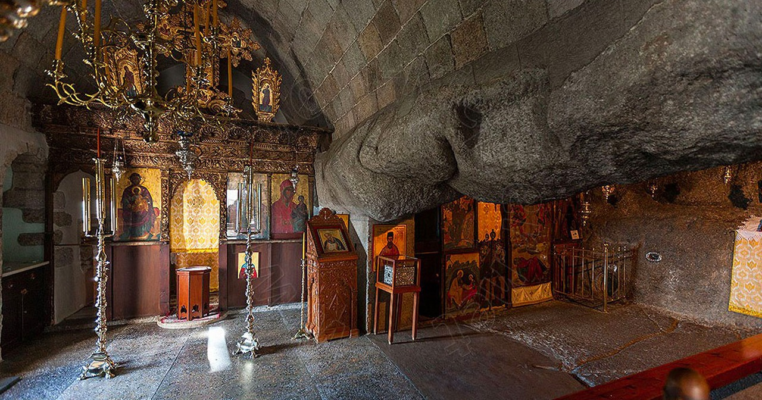
According to Christian tradition, it was here that St. John the Apostle was exiled during the reign of Emperor Domitian. While living in a small cave overlooking the Aegean Sea, he received the divine visions that would later become the Book of Revelation, the final book of the New Testament.
Today, the Cave of the Apocalypse remains one of Christianity’s most revered pilgrimage sites.
The cave itself is remarkably simple. There are no grand architectural displays or elaborate decorations. Instead, pilgrims enter a quiet stone chamber where centuries of prayer have created an atmosphere of extraordinary reverence. The silence within the cave often leaves a deeper impression than any spoken explanation could.
Many visitors describe this as the spiritual heart of the entire journey.
It is a place where history, Scripture, and personal prayer naturally come together, inviting each pilgrim to pause – not only to remember the faith of the Apostles, but also to reflect on their own journey of faith.
The House of the Virgin Mary – A Place Where Peace Speaks More Loudly Than Words
Every pilgrimage has a destination that remains in the heart long after the journey ends.
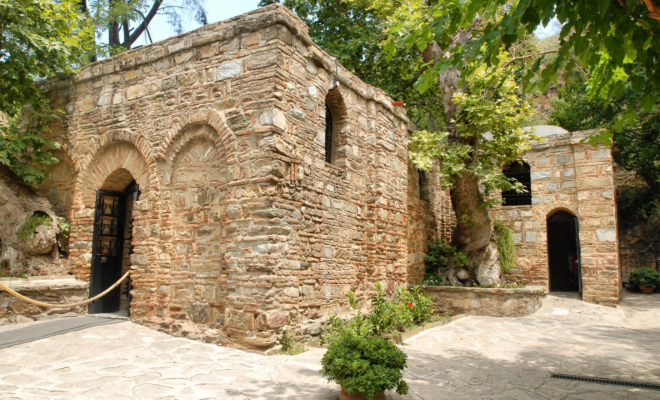
For many travelers following the footsteps of St. Paul, that place is not a magnificent cathedral or a famous archaeological site. Instead, it is a modest stone house nestled quietly among the pine forests overlooking the ancient city of Ephesus.
According to Christian tradition, this is the place where the Blessed Virgin Mary spent the final years of her earthly life under the care of St. John the Apostle. Hidden on the gentle slopes of Mount Koressos, the House of the Virgin Mary has become one of the most beloved Marian pilgrimage sites in the world, welcoming millions of visitors each year from every continent and from many different Christian traditions.
Unlike Europe’s grand basilicas, there is nothing overwhelming about this sanctuary. There are no soaring domes, elaborate mosaics, or monumental façades designed to inspire awe. Its beauty lies precisely in its simplicity.
Pilgrims arrive quietly, often lowering their voices almost instinctively as they walk along shaded pathways lined with ancient trees. Inside the small stone chapel, prayer replaces conversation. Candles flicker gently beneath centuries-old walls while visitors pause to entrust their intentions, their families, and their hopes to the loving care of Our Blessed Mother.
Perhaps that is why this sacred place leaves such a lasting impression.
People rarely remember the architecture.
They remember the peace.
Many travelers later describe this visit not as the emotional high point of the itinerary, but as its quietest and most personal moment – a place where faith becomes less about understanding and more about simply being present.
Life Between Sacred Destinations
One of the greatest gifts of a pilgrimage cruise is that the journey never truly pauses between destinations.
On traditional land tours, travel days are often viewed as necessary transitions – hours spent on highways or waiting in airports before reaching the next stop. A cruise transforms those intervals into meaningful experiences of their own.
Each evening, as the ship gently departs one harbor and sails toward another, the Mediterranean reveals an entirely different rhythm of travel.
Guests gather on the open decks to watch the coastline slowly disappear beneath a golden sunset. Some enjoy conversations over dinner while others simply sit quietly, listening to the sound of the sea. There is no urgency to unpack again, no concern about tomorrow’s hotel check-in, and no need to prepare for another long journey by coach.
Everything needed for the voyage is already there.
The ship itself becomes a place of rest, reflection, and community.
Morning arrives with a different view outside the window. Instead of another city street, travelers awaken to the sight of a new island, another historic harbor, or a coastline rich with biblical history. Breakfast is followed by the excitement of discovering another destination, while evenings invite everyone back to the comfort and familiarity of life aboard the ship.
This gentle rhythm allows pilgrims to remain fully present throughout the journey rather than feeling consumed by constant logistics.
It is an experience that many travelers describe as unexpectedly restorative.
Discovering Greece Beyond the Pages of History
Although the pilgrimage follows some of Christianity’s most significant historical sites, it also introduces travelers to the timeless charm of Greek culture.
There is something deeply welcoming about life in Greece.
Perhaps it is the warmth of the people, the leisurely pace of daily life, or the way conversations naturally linger over coffee in village squares overlooking the sea. Visitors quickly discover that hospitality here is not simply a service – it is part of the country’s identity.
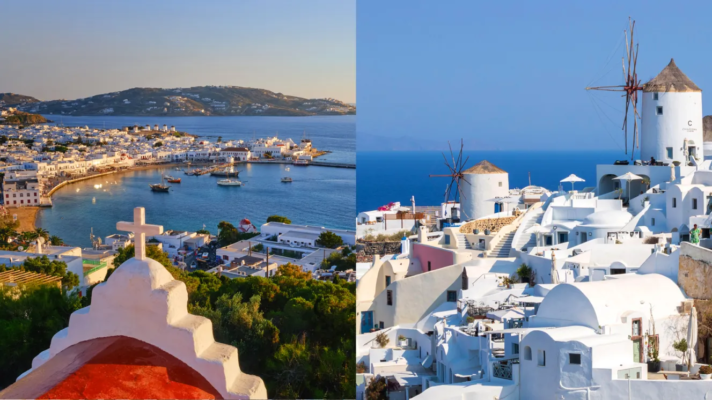
Walking through the narrow whitewashed streets of Mykonos, travelers encounter colorful balconies overflowing with flowers, family-owned cafés, and quiet chapels tucked between winding alleyways. Every turn reveals another postcard-perfect view, yet the true beauty of the island lies in its relaxed atmosphere rather than its famous photographs.
Further south, Santorini offers an entirely different experience. Dramatic volcanic cliffs rise above the deep blue waters of the Aegean, creating one of the world’s most recognizable landscapes. As evening approaches, visitors gather along the caldera to witness a sunset that has inspired artists, writers, and travelers for generations. The changing colors of the sky reflected across the sea create a moment that feels almost timeless.
These destinations provide more than visual beauty.
They remind pilgrims that faith has always flourished within real communities, surrounded by everyday life, local traditions, and cultures that continue to evolve while honoring their remarkable past.
Exploring Greece in this way becomes not simply an opportunity to admire extraordinary scenery, but also to appreciate a civilization whose influence continues to shape both Western culture and Christian history.
A Journey That Continues Long After You Return Home
Every voyage eventually reaches its final port.
Suitcases are packed one last time, farewell embraces are exchanged, and flights carry travelers back to the routines of everyday life.
Yet pilgrimages rarely end where the itinerary does.
Long after the photographs have been shared and the souvenirs carefully unpacked, certain moments continue to return unexpectedly: the quiet prayer inside the House of the Virgin Mary, the silence of the Cave of the Apocalypse, the breathtaking view from Mars Hill, or the peaceful evenings spent watching the Aegean Sea stretch endlessly toward the horizon.
These memories remain because they represent more than beautiful destinations.
They become reminders of conversations with fellow pilgrims, moments of gratitude, renewed faith, and the rare opportunity to step away from the demands of everyday life long enough to listen – to history, to Scripture, and perhaps even to one’s own heart.
That may be the greatest gift of a pilgrimage cruise.
It allows travelers not only to discover extraordinary places but also to rediscover the quiet space within themselves that modern life often leaves behind.
Follow the Footsteps of St. Paul with Carnival US Travel
At Carnival US Travel, we believe that meaningful journeys are measured not only by the destinations they include, but by the experiences they create and the memories they leave behind.
Our Footsteps of St. Paul & Mediterranean Pilgrimage Cruise has been thoughtfully designed to combine spiritual discovery, cultural immersion, and the comfort of cruising through one of the world’s most beautiful regions. From Athens and Ancient Corinth to Patmos, Ephesus, Mykonos, and Santorini, every destination invites travelers to encounter the story of the early Church while experiencing the timeless beauty of the Aegean Sea.
Whether this is your first pilgrimage or a long-awaited return to the lands of the New Testament, we invite you to join us on a journey where faith, history, and the Mediterranean come together in one unforgettable experience.
Because some journeys are remembered not for how far they take us from home, but for how deeply they bring us back to what truly matters.