
Pilgrimage Blog/Post
What Makes a Sacred Site a Pilgrimage Destination for Millions?
Not Every Grand Church Becomes a Pilgrimage Site
Around the world, thousands of churches, basilicas, shrines, and religious landmarks are celebrated for their history, architecture, or cultural significance. Yet only a select few become pilgrimage destinations that welcome millions of visitors year after year.
Interestingly, a sacred site’s importance is rarely determined by its size or architectural grandeur alone. Some of the world’s most revered pilgrimage destinations began as quiet villages or remote communities that were once virtually unknown beyond their local regions.
Consider Fatima in Portugal, Lourdes in France, or Assisi in Italy. Before becoming internationally recognized pilgrimage sites, each was an ordinary town with little global prominence. Today, however, they attract millions of pilgrims from across the world.
What transforms an ordinary place into one of Christianity’s most meaningful pilgrimage destinations? The answer lies not only in history but also in faith, tradition, and the lasting spiritual experiences these places continue to offer.
Faith and History: The Foundation of Every Pilgrimage Site
Every major pilgrimage site is rooted in a story of faith. Some are closely connected with the lives of saints, while others commemorate significant events in the history of the Church.
Assisi, the birthplace of St. Francis, became a pilgrimage destination because of his life of humility, simplicity, and love for all creation. Likewise, Vatican City is far more than the administrative center of the Catholic Church – it is the spiritual heart of Catholicism, closely associated with St. Peter and the origins of Christianity itself.
These places allow pilgrims to encounter centuries of faith in a tangible way. Their historical and spiritual significance gives them a meaning that extends far beyond architecture alone.
Stories That Continue Across Generations
History alone does not explain why millions continue making pilgrimages today. The true strength of a sacred site lies in its ability to keep touching people’s lives across generations.
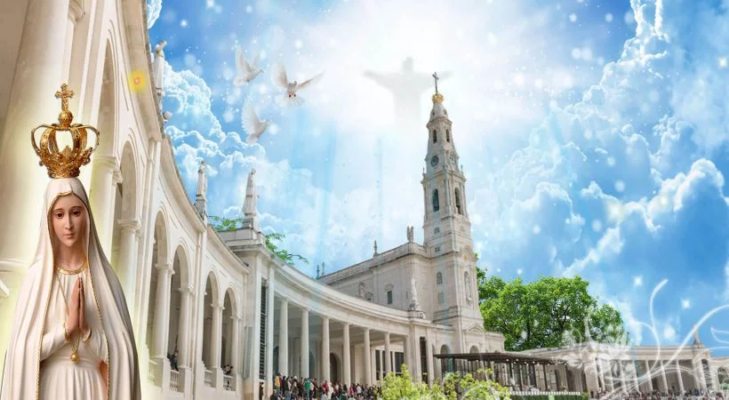
At Fátima, the story of the Marian apparitions of 1917 continues to inspire pilgrims more than a century later. In Lourdes, millions gather every year seeking hope, healing, and prayer. Their stories remain alive because they continue to be shared through families, parishes, and communities.
Each new generation discovers these sacred places in a personal way, adding another chapter to a story that has endured for decades or even centuries.
A Pilgrimage Site Is More Than a Destination
Some places look spectacular in photographs. Pilgrimage sites are different. Their deepest meaning can only be understood by being there.
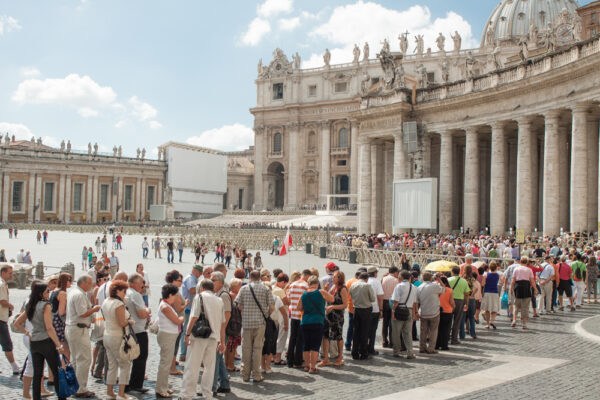
Whether joining the candlelight procession in Fatima, entering the Basilica of St. Francis in Assisi, or standing in St. Peter’s Square during the Angelus, pilgrims often remember the atmosphere more than the architecture itself.
Pilgrimage is not simply about visiting a destination. It is an opportunity to slow down, reflect, pray, and reconnect with what matters most.
Why Do So Many Pilgrims Return Again and Again?
Many pilgrims return to the same sacred sites several times throughout their lives. They come back not because they have missed something, but because each stage of life brings different hopes, prayers, and experiences.
A first visit may be driven by curiosity. A later pilgrimage may become a journey of gratitude, healing, or spiritual renewal. This is what makes pilgrimage different from ordinary travel – the destination remains the same, but the journey is never identical.
What Continues to Draw Millions of Pilgrims Each Year?
In an age when almost every destination can be explored online, millions of people still choose to travel to sacred sites every year.
Perhaps the answer lies in a universal human desire for meaning, connection, and moments of peace. Regardless of where they come from, many pilgrims discover a sense of hope and spiritual renewal at places such as the Vatican, Fatima, Lourdes, and Assisi.
These destinations continue to welcome millions because they offer something that cannot be fully experienced through a screen: the opportunity to encounter faith in a living community.
Conclusion
Not every cathedral or historic church becomes a pilgrimage site. What gives a sacred place its lasting significance is not architecture or geography alone, but the unique combination of faith, history, shared memory, and personal experience.
That is why, despite a rapidly changing world, places such as the Vatican, Fátima, Lourdes, and Assisi continue to hold a special place in the hearts of millions of pilgrims across generations.
Experience Europe’s Sacred Sites with Carnival US Travel
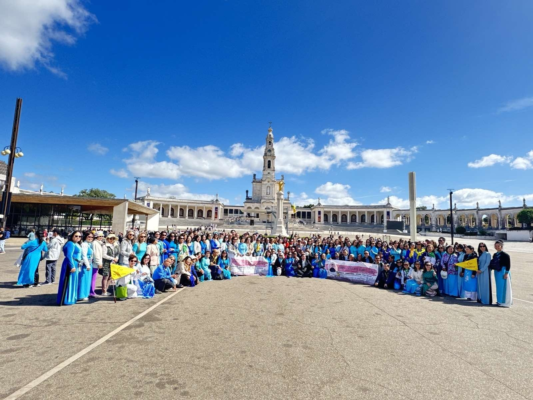
At Carnival US Travel, our carefully curated Journey of Faith invites you to experience Europe’s most meaningful pilgrimage destinations, where history, culture, and faith come together in unforgettable ways. Join us to discover the spiritual heritage of the Vatican, Fátima, Lourdes, Assisi, and many other inspiring destinations across Europe.
Contact us today to learn more about our pilgrimage tours.
Call us: 669-265-7814 | 669-292-7688
Facebook: https://www.facebook.com/carnivalinus
Serving travelers from San Jose, the San Francisco Bay Area, and across the United States.